Wednesday, October 30, 2013

Please, please, don't be a Philistine...


I have to laugh at the irony of a Negev eco-community being evacuated עברית on the grounds that it was 1) illegal and 2) damages the environment. My favorite quote was that of Judge Yosef Alón remarking, “public lands are not up for grabs for anyone who wants to take possession of them.” Really? It appears that this is true only in Israel proper, or has His Honor not heard about West Bank outposts erected precisely on land “up for grabs for anyone who wants”? Moreover, you want to talk about environmental damage caused by the settlements? A search turned this up in seconds. Hard to see how a bunch of geodesic domes causes as much damage as this or this or this.


Oh, but wait: Why should we believe a bunch of olive farmers and shepherds? Perhaps because our patriarch Abraham had this exact problem in Genesis 21:25 (which I believe we’re coming up on this very week in Parshát Toldót), except the roles are switched: Abraham complains to Abimelech that Abimelech’s servants filled Abraham’s well with earth. And guess what Abimelech replies? The same thing that the IDF Military Liaison rattles off every other day in response to Pali complaints of harassment, vandalism, or other settler recreational pursuits: "I do not know who has done this thing; you did not tell me, nor did I hear of it until today." [Gen 21:26]. Fast forward to 2013: I would hope that having once been shepherds ourselves – utterly dependent upon accessible, uncontaminated water – we could do better than the Philistines did to us.


אנא, במטותא מכם, אל תנהגו כפּלישתים...


לא יכולתי שלא לגחך בקוראי על פינוי ישוב אקולוגי בנגב ושהעילה לכך היא כי: 1) הוא אינו חוקי ו-2) הוא גורם נזק סביבתי. יותר מכל חביבה עלי קביעתו של השופט יוסף אלון, לפיה "מקרקעי הציבור והמדינה אינם הפקר", ושלא כל מי שחשקה נפשו בהם רשאי לפלוש לתוכם. באמת? נראה כי זו אולי האמת רק בתחומי הקו הירוק, או שמא לא שמע כבודו על המאחזים בגדה המערבית שהוקמו דווקא על מקרקעים שהיו בבחינת "הפקר" לכל מי שחשקה נפשו בהם? יתרה מזאת, רוצים לדבר על נזק סביבתי שנגרם על ידי התנחלויות? חיפוש מהיר מעלה תוך שניות את זה. קשה להבין כיצד גורמות כמה כיפות גיאודזיות יותר נזק מזה, מזה, או מזה.


אך רק רגע – מדוע שנאמין לחבורה של מגדלי זיתים ורועי צאן? אולי משום שאברהם אבינו נתקל בדיוק באותה בעיה בספר בראשית כ"א כ"ה (שדומני כי נקרא אותו השבת בפרשת השבוע "תולדות"), אולם שם התהפכו היוצרות: אברהם מוכיח את אבימלך על שעבדיו סתמו את הבארות אשר חפר אברהם. ומה משיב לו אלימלך, תנחשו? בדיוק מה שמקשקש קצין הקישור הצה"לי כל שני וחמישי בתגובה לתלונות הפלסטינים על הצקות, השחתת רכוש, ושאר מיני שעשועים החביבים על המתנחלים (בראשית כ"א כ"ו): "לֹא יָדַעְתִּי מִי עָשָׂה אֶת-הַדָּבָר הַזֶּה; וְגַם-אַתָּה לֹא-הִגַּדְתָּ לִּי, וְגַם אָנֹכִי לֹא שָׁמַעְתִּיבִּלְתִּי הַיּוֹם". הרצה קדימה לשנת 2013: הייתי רוצה לקוות שאנו, אשר היינו פעם רועי צאן בעצמנו, ולפיכך תלויים לחלוטין בנגישות למיים לא מזוהמים, ננהג יותר בהגינות כלפי שכנינו מכפי שנהגו הפּלשתים כלפינו.


Tuesday, October 22, 2013

Widger, stop your weepin'

OK. I’ve officially had it with the mopey, maudlin reflections on digital technology the likes of Caeli Wolfson Widger’s “Why I Silence Your Call”. Specifically regarding the practice of letting calls go to voice, as Miss Manners has been telling any of us who will listen ever since the answering machine was invented, it’s not impolite to screen your calls; it’s simply the modern-day equivalent of instructing one’s butler to tell callers, “Pansy is unable to take callers right now. You may leave your card.” If you were unfortunate enough not to have a butler, you delegated this duty to another household member, or simply didn’t answer the door. Perhaps you hung a note on your door to that effect, Martin Luther style. See? Nothing new here.

What some fail to grasp is that a phone call is by its very nature intrusive: It’s by definition someone demanding your immediate attention and time. Thus phone calls should be reserved for emergencies. On the rare occasions when I initiate a phone call, I ask the recipient, “Is this a good time for you?” or “Have you got a minute?” Diving right in is now considered presuming on someone’s time. Even then I often preface a call with a text, so the recipient has an idea of what I want and can respond at their convenience.

In a related vein, can we please stop moaning that e-mail “just doesn’t have the nuance / tone / voice cues” of telephoning? And that e-readers “just aren’t the same as a ‘real book that I hold in my hands’”? If e-mail doesn’t allow for voice cues, then it certainly shares an epistolary tradition that goes all the way back to the first chiseled word. I’m sure that when the first printed book rolled off the presses, a chorus of monks could be heard from their collective scriptoria: “But it’s just not the same as ink and parchment!” And the first papyrus users no doubt heard their moms say, “But it just doesn’t have the same feel as that cold, chiseled stone!”

Folks, e-mail is simply a newer way to convey text. That’s all it is. It has no inherent inferiority to what preceded it, nor does an e-reader. The phenomenon of mass-produced paper books only existed for the few generations growing up post World War II. Remember Scholastic Books that we all take for granted? Those didn’t exist pre-WWII; before that, only the wealthy had regular access to paper books. So there is nothing more inherently book-like about a paper book than there is about a book read on an e-reader. The same information is being conveyed (at even less cost), just digitally.

That having been said, I’m expecting not to hear any more weeping and wailing about technology and how it was in the good ol’ days before we had it. Get over it. And feel free to call me if it’s an emergency.

Monday, October 21, 2013

Jezebel goes for the name-change jugular

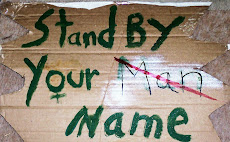
Wanted to share with my readers some comments on Jezebel’s Lindy West’s “Men Who Insist You Change Your Name Make Terrible Husbands”. Readers’ remarks are surrounded by quotes. My remarks are in red. I edited many comments to render them smoother / more readable (what’s new?):

“I took my husband's name. It was a really hard thing to do!”

Well, why’dja do it, then?

[same poster as above]:
“…Then he died, and I have his name. It's been almost 10 years, now. I feel like if I ever remarry, I'll be obligated to take on a new name again. Because I can't be married to one person while keeping my dead husband's name, can I?”

Huh? Sure you can, but I’m surprised you don’t see one other option waving its arms wildly up there: Revert to your birth name. Then you’re not dissing anyone, dead or alive.

“Before we got married, I suggested that we blend our names to represent our new household. His response: ‘I would spend the rest of my life actively taking sh_t from every man I know and meet about this. Yes, the married name is a double standard, and yes, it disadvantages the woman. But patriarchy doesn't just limit women's choices."

Aw, poor patriarchs. Their choices are limited too, boo-hoo. Yes: limited to having power over women. I feel just terrible about it. Bet sh-t-taking husband does too.

“We couldn't hyphenate; both of our names were 10 letters long!”

Imagine! That’s why we have this device called “initials”. For instance, we got used to writing our daughter’s surname as “E-S” / א-ס. Rarely does The Whole Thing need to be spelled out.

“I have an 11-letter first name and I've had issues entering it on forms my entire life. I'd HATE to have to try and squeeze in a long, hyphenated last name.”

[BarelyLethal replies]:
“I keep seeing ‘Oh! It's terrible on forms! Woe is me!’ Don't you think that as more of us have multiple or hyphenated names, the forms would change to accommodate us? I haven't seen a credit card application in the last five years that doesn't have at least 25 spaces for Last Name… if more of us adopted hyphenated and / or multiple last names, the forms would have to catch up. So ‘I'm not going to name my kid thusly because forms’ doesn't hold water if it's really something you want to do.”

Elegantly said, BarelyLethal. Just like so many things in life that cause us to extend our comfort zones: There will always be plenty of excuses not to; if you really want to do something, those excuses won’t stop you.

“For the record, I'm taking my husband's last name in the future because my dad is a jackass. Nothing to do with his name whatsoever. Sorry, future husband!”

First off, why’re you apologizing to a man you’ve never met? Second, supposing you remain unmarried? Why not unload your dad’s jackassery now? No time like the present…

Have a listen to what Homosaur said about the possibility of taking his wife’s surname:

“The day I take her father's name is the day I cut my d_ck off with a scissors.”

Uh. There is so much macho patriarchy dripping from that remark, not to mention plain old generic anger, I’d be afraid to occupy the same ZIP code as this guy. And to think someone is married to him. Goddess keep her.

Perdue wrote: “If you're so hell-bent on One Family, One Name (which I personally don't care about, having seen approximately eleventy billion kids with different last names than at least one parent in my time on this earth, and exactly zero mishaps as a result)…”

Aspirellls: “I was listening to a fascinating story the other day about engaged couples who both have hyphenated last names and have no clue what to do. I don't know where to even begin navigating that one.”

That story indeed sounds fascinating, Aspirellls. Gee, this is rocket science: How about each retains one name and drops one name, then combine? Or combine all four? Whatever these mysterious engaged couples decide, the earth will keep spinning on its axis, I’m quite certain.

“My best friend growing up was hyphenated and she HATED it.”

Oh. Well, then. End Of Discussion. Because we all know that one anecdote equals data. Well, I venture another anecdote: Two of my hypho-kids dropped the post-hyphen name; the third as of this writing is remaining hyphenated. Stay tuned.

“The fact I have a different last name from the other 3/4 of my family has caused a problem exactly .... never. And I certainly don't think it makes me less married or less committed in any possible way.”

Yowza. Amen, Sister. Preach it.

Yoana’s answer to the claim ‘A woman who won’t take her husband’s surname puts herself ahead of her marriage.’
Translation: She's reluctant to be my personal life assistant.

LaurelTreeDaphne: “Is it OK for us to participate in something that contributes to our own disenfranchisement in the interest of holding onto tradition? I wish there was more acknowledgement that taking your husband's last name is inherently problematic, no matter what your reasons for doing so. When you do, you're contributing to that culture that makes 96% of men believe it's emasculating to take a woman's name, a fact that tends to get lost in the ‘choose your choice’ chirp that usually surrounds this topic.

“See, that overwhelming number (96%?!?!?!) is why I am not OK with women taking their husband's last name. Every time this topic comes up, women come out of the woodwork with their personal stories about why it was really important to them to take their husband's last name. OK, ‘your name, your choice and all that’. But on a societal level...oof. That percentage is staggering, and it is not going to change unless we as women start pushing the issue. And it's important to start pushing the issue, because the automatic ‘We want to be one family, one name’ thing is rooted in some really problematic history of women and children being the property of men.

“96% of men believe that taking on a piece of their partner's identity diminishes their manhood in some way. And it's completely reinforced by society: Not only do most people just assume that women will take their husbands’ last names, but the bureaucracy is set up to make it really, really difficult for a man to change his name. You say that it's fine for feminists to want to hold onto traditions, but is it really, when the tradition is so problematic and so reflective of the lesser value men place on us?”

Sigh. I think I love you, LaurelTreeDaphne.

“Changed my name when I married the first time. After 10 years when I divorced, it still felt borrowed, so I went back to my maiden. Changing when I married was no sweat; going back to my maiden was a pain in the butt! Everyone wanted double proof that you got divorced and that it was stated in court that you went back to your own name. When I married and wanted to change it, everyone was 'okey-dokey!' Decided I would never change it again, I don't care if I marry a Rockefeller.”

Woo-hoo! And picture me bowing down to these next three:

“I'm glad I did it [reverted to my birth name post-divorce], but it infuriated me how much of a pain they made it, like it was further punishment for me for daring to break away from conformity.”

“Plenty of men have names that are ugly, silly, or difficult to spell or pronounce, but funnily enough, this doesn't usually result in their taking their wives' names. I'm not saying that makes other reasoning invalid, but I am saying you can't divorce it from the larger patriarchal construct. If it was really just about getting rid of a ‘bad’ name, men would change their names as often as women do.”

“I have had people tell me they ‘wouldn't feel as connected to their kids’ if they didn't share the same last name. I always thought that was a weird response. It's not like when I pick my kid up from daycare she looks at me quizzically and asks for ID.”

The problem with this "doing what makes the most sense for you" is that often that segues into taking the path of least resistance, which in many cases is simply Taking His Name. This irks me. Keep. Your. Name. If you dislike it, by all means change it, but NOT because there's a man involved.

FeministFury knocks it outta the park:

“The argument, ‘well, you're just going from your father's name to your husband's name’ is stupid (sorry, it is). If more women stopped passing on their husbands' names to their children, the names wouldn't just be fathers' but mothers' as well, which would resolve the problem, so that response is ultimately self-defeating. It also obscures other naming possibilities, thereby closing off creativity. For instance, women could change their names to their mothers' names upon marriage. They could invent new names. They could resurrect a long-forgotten matrilineal name from their ancestry. The options aren't reduced to two, and I bet we kind of don't want to resolve this problem creatively because it's a lot easier to feel defeatist, i.e., ‘well, we're damned if we do, damned if we don't, aren't we? Our hands are tied either way.’ Right. So isn't it easiest just to capitulate (nope, we're not, and nope, that isn't the best response)?”

And the Final Three:

“Pretty much if your life partner who's supposed to be your equal ‘makes’ you do something, or decides to ‘let’ you do something, or issues an ultimatum - you are looking at a giant red flag.”

“What year is this? If there's one tradition that should've died out 50 years ago, it's that one.”

“I'm keeping my name. If you're curious as to why, please go ask my fiancé if he is keeping his name, and why. There you go.”

Tuesday, September 24, 2013

City buses on Saturdays? Maybe the *mashiach* is on her way!


While I applaud the initiative to have intracity buses run on Saturdays, I’d tweak the plan:

  1. First of all, why specify keeping buses out of Orthodox neighborhoods? No one wants buses roaring down their street in their day off. Why mention the Orthodox at all? Simply operate routes that don’t run through residential areas. Israel’s cities are fortunately walkable enough for it not to be a major hardship to get from one’s home to the nearest thoroughfare by foot. Running two buses per hour on certain thoroughfares should do it.
  2. I’m all for 7/365 public transportation, but what about inter-city travel? Inter-city buses and trains bother no one. Even bi-hourly trains between cities would be a huge improvement. The day I can exit the Saturday ghetto we call Jerusalem will be the triumph of my life.

Sunday, July 7, 2013

Pageant followup

First of all, when researching pageant culture, I happened upon this tidbit about a pageant for disabled girls, which takes place in Kewanee, IL, where my college roommate and friend across the hall hail from (shoutout to Karen Peart and Kay Blachinsky wherever you are! Couldn't find you on Facebook).

What led me there was this interesting take on the pageants we so love to hate. I'd also like to offer a theory about the advent of the pageant scene, and the demographic that seems to populate it. I'll start out with a little bio of my own mom, Zelda Luke Reiz. Mom grew up in a low-income family, so she was eligible for free dance lessons at Swope Settlement in Kansas City. She and her sister were nurtured there by the director, a wonderful woman named Esther Lane, who took them under her wing and became their patron, so to speak. The sister act ended up performing in nightclubs across the Midwest, which earned them their college tuition. But the road, which began at age five, was grueling. Daily rehearsals in addition to schoolwork; and their mother, an expert seamstress, sewed all their costumes. Fast forward to 2013, and let's compare to low-income families today who want to give their daughters a push, but lack the resources that wealthier families have:

  1. Nowadays you don't need costly lessons and other extracurriculars that the pageant demographic often can't afford. Anyone can turn on YouTube, copy a bunch of (more-often-than-not sexy) moves and work up a routine, have a friend or relative make a glitzy costume, and as long as you have the wherewithal to get there, your kid can enter...
  2. ...and possibly earn cash, which I theorize is this demographic's way of thumbing its nose at the resource-heavy folks who can ultimately launch their kids (ordinarily meaning send them to college, which is increasingly out of reach, even for the middle class). By entering their daughters in pageants, this demographic might be saying, "We'll just teach our daughters to get by on their smiles" (i.e., looks, ability to exude implied sexual availability), a shortcut, if you will, to launching them for those who don't have the resources to fund an "upper-class" track.
What do others think? I welcome your thoughts.

Friday, July 5, 2013

From infant hairband to stripper: Pimping our daughters

“…according to [Mary] Douglas, just as misplacement and inappropriateness is the essence of defilement, the sacred would be that which fully complies with the corresponding categories. That is to say, sanctity in itself is the ability to fit into categories. The purity / defilement dichotomy so fundamental to religion and culture is determined by an individual’s / object’s (in)ability to comply with or to fit into precise categories.

Therefore, elements that appear in the wrong category or that don’t fully apply to any existing category disturb the social order, even being viewed as threatening by entire societies or individuals. When encountered with such displacement or ambiguity, society will try to avoid it or eradicate it"

The obvious example that the above brings to mind is of course homosexuality: Gays, and to an even greater extent transgenders, and intersexuals, do not fit into our binary categories, as explained by Kiel [“Binary oppositions such as good / evil, pure / profane, myself / others, raw / cooked and so forth, are fundamental to human thought and to formation processes of societies (Douglas, 1966; Hall, 1997; Lévi-Strauss, 2008; Turner, 1969).”]

Hence the felt need to label our infant children as girls or boys, leading to the associated practice of (girl) infant hairbands (Goddess save us). What makes my stomach reflexively seize up when I see these monstrosities is how uncomfortable it looks. Of course: As early as infancy, we’re already sending our girls the message that they’re expected to undergo discomfort in order to be accepted into society’s ideal of feminine beauty.

Disturbingly, notice that we don’t mark our infant boys correspondingly. This is because male = default, and female = Other, as well as imperfect, flawed. The hairband, therefore, is a signal to the world, telling it, “I’m a girl, so use your ‘girly voice’ when you talk to me and treat me as disabled — an invalid.” So parents who put hairbands on their girls are, from their first moments, grooming them to be weak, fragile, and dependent, the extreme of which is a prostitute or a stripper. The prostitute is subjugated by her pimp; while the stripper is not much better off: Accounts of women earning their way through grad school by stripping or posing for Playboy notwithstanding, what makes the stripper titillating is her very abjection, which endows those who paid to watch her (men and women alike) with instant power over her.

Which brings me to Little Miss Sunshine, which I happened just to have watched yesterday (I know; I’m seven years behind the times…at least). In it, atypical (bespectacled, slightly roundish) seven-year-old child beauty pageant contestant Olive “upsets the order” by performing a spoof striptease to explicitly sexual music for the talent competition, which lands her and her family in the police precinct after a complaint is filed.
Before Olive’s act, each of her fellow prepubescent contestants, slathered disturbingly with makeup and fake tanner, perform “acceptable” routines, i.e., hinting at (or even dripping with) sex, yet not explicitly sexual as Olive’s routine is. This prompts the question in my mind: Would Olive’s routine have been considered acceptable if she had been “pageant-typical” in appearance, like the other contestants? While we’ll never know since the story is fictional, there’s no shortage of real-world examples thereof.

The Little Miss Sunshine pageant opens with the nauseating emcee caressingly crooning “America” “to” the posed, lined-up contestants, a not-in-the-least-subtle message that the pageant contestants are the very embodiment of what America worships and aspires to as the feminine ideal: In addition to having been born whole and perfect (any disabled kids – or adults – entering beauty pageants?), they’ve just emerged from what is basically a Beauty Conveyer Belt that has ejected them straight onto the stage, sequined, made up, waxed, and sculpted within an inch of their little lives and radiating an unattainable female ideal…like strippers.


So followed to its logical conclusion, what begins as a seemingly innocuous and frivolous accessory is actually the first warped expectation she internalizes about being female. Instead of having to unwarp this garbage, wouldn’t it make more sense just not to engage in it in the first place? Parents, I implore: Let’s not pimp our daughters. They’re worth more to us than a tiara and a sash, are they not?

Thursday, July 4, 2013

Free the Jewish Sabbath תשוחרר השבת

עברית לאחר האנגלית, למטה:  

I’ve had it up to here with balance. How balanced is it that Christians get public transportation on their day of rest, and Muslims get public transportation on their day of rest, but not me? What’s up with that? Don’t talk to me about balance, and please don’t talk to me about that vague concept that no one seems to be able to define, "character of the Jewish state" (of which there are no fewer than six instances in Procaccia’s piece). If I’m Jewish, and I spend my Saturdays riding the train to go shopping, then ergo, by virtue of my Jewishness, the surrounding state and day, are Jewish. It’s all Jewish, as long as Jews are doing it. We need to unclench our knuckles from the branch known as “preserving our Jewish character”; that branch is bowed so low by now, our feet are already touching the ground.

And if indeed I do ride and shop on Saturday, how, pray tell, does it affect those who choose not to? In case Procaccia hasn’t noticed, this isn’t 1948: We how have this thing called zoning: Retail establishments are for the most part no longer scattered amidst residences. And those located in the hearts of areas populated by Sabbath-observant Jews would not find it worth opening on Saturday in any case. Problem solved.

How is it affecting anyone, Orthodox or otherwise, if I’m at a mall or shopping center, which by definition are located so far from residences that no one in the latter could possibly be aware of it (as long as they turn off those blasted shopper announcement loops, a blessing for us all)?

Similarly, public transportation routes could easily be altered on Saturdays to bypass all residential districts. We’d have to walk further to reach main arteries, but it’s certainly better than being held prisoners to an absurd system that runs according to some so-called “consensus” or “status quo”. Who decided that a bus departing Eilat at 11 a.m. on Saturday is less disruptive to the Sabbath karma than one departing Jerusalem at the same time? I’m certain a route could be found for the latter that would disturb no one.

The present situation also favors car travel, which in turn favors those with money. Gas stations and battery changing stations are automated, so that no staff need be hired; whereas we who depend on public transportation still need train conductors and bus drivers. But if these personnel were offered time and a half, I’m betting there’d be no shortage of applicants, non-Jews and Jews alike, for those positions. And in the future, once these are phased out in favor of automation, then what will the excuse be? That trains, buses, and self-checkout lanes “offend Orthodox sensitivities”? Where do Orthodox sensitivities stop, and mine begin?

This country’s character doesn’t need preserving, it needs just the opposite: It needs opening up to the 21st-century reality. Public transportation on Saturdays would “open up” this country more than any single amenity. It would grease the wheels of both tourism and immigration, not to mention the economy at large. And transactions carried out on Saturdays affect no one except those engaged therein. So don’t give me warmed-over platitudes about balance, compromise, and national character. Give me a way to get from my residence to those of my friends in other communities, seven days a week. I promise to conduct myself as befits a Jew and make no noise while doing so. Can the Orthodox promise the same?

הדיבורים על איזון [לא הצלחתי למצוא את המאמר בעברית] כבר עלו לי על העצבים. איזה מין איזון הוא זה שהנוצרים נהנים מתחבורה ציבורית ביום המנוחה שלהם, והמוסלמים נהנים מתחבורה ציבורית ביום המנוחה שלהם, אבל אני לא? מה הקטע פה? אל תדברו איתי על איזון, ואל תדברו איתי על אותו מונח מעורפל, שלא נראה כי יש בכלל מישהו המסוגל להגדירו, הקרוי "צביון המדינה היהודית" (והמוזכר לא פחות משש פעמים במאמר של פרוקצ'יה).

 אם אני יהודיה ואני מבלה את השבת שלי בנסיעה ברכבת כדי לערוך קניות, אזי מן הסתם מעצם יהדותי, כך גם האווירה והיום הסובבים אותי הם יהודים. כל דבר הוא יהודי כל זמן שיהודים עושים אותו. אנו צריכים לחלץ את פרקי אצבעותינו מהענף הידוע כ"שימור הצביון היהודי"; הענף הזה כבר כל כך כפוף עד שכפות רגלינו כבר נוגעות בקרקע.

ואם אמנם אני נוסעת ועורכת קניות בשבת, כיצד משפיע הדבר, מי זה יאמר לי ומי יספר, על אלו הבוחרים שלא לעשות זאת? לתשומת ליבה של פרוקצ'יה, השנה אינה 1948: יש לנו כיום מה שנקרא איזרור. מוסדות הסחר הקמעונאי ברובם אינם מפוזרים עוד בקרב איזורי המגורים. ואילו לאלו הממוקמים בלב האזורים המאוכלסים ביהודים שומרי שבת ממילא לא כדאי לפתוח בשבת, כך שהבעיה נפתרה.

כיצד יושפע מישהו, דתי או לא דתי, אם אני נמצאת בקניון או במרכז קניות, שמעצם הגדרתם מצויים הרחק מאיזורי המגורים, כך שאף אחד באותם איזורים לא יכול להיות אפילו מודע לכך (בתנאי שיכבו את אותן הודעות קוליות ארורות ובלתי-פוסקות לקונים, מה שכולנו נקדם בברכה)?

כמו כן ניתן בקלות לשנות את מסלולי התחבורה הציבורית בשבת כך שיעקפו את כל איזורי המגורים. ניאלץ ללכת יותר רחוק על מנת להגיע לכבישים הראשיים, אך זה בוודאי יותר טוב מלהיות שבויים במערכת אבסורדית המנוהלת על פי מה שקרוי "קונצנזוס" או "סטאטוס קוו". מי החליט שאוטובוס היוצא מאילת בשבת ב-11 לפנה"צ מפריע פחות לקארמה של השבת מעמיתו היוצא מירושליים באותו זמן? אני סמוכה ובטוחה כי ניתן למצוא מסלול לאוטובוס מירושליים שלא יפריע לאף אחד.

המצב הקיים גם מפלה לטובה את הנסיעה במכונית, מה שבעצם מפלה לטובה את אלו שיש להם כסף. תחנות דלק ותחנות להחלפת מצברים הן אוטומאטיות, כך שאין צורך להעסיק עובדים; ואילו אנו, התלויים בתחבורה הציורית, עדיין זקוקים לכרטיסנים ברכבת ולנהגי אוטובוס. אולם אם יציעו לעובדים אלו שכר של 150%בשבת, אני מוכנה להתערב שלא יהיה מחסור במבקשי עבודה למשרות אלו, יהודים ולא-יהודים. ובעתיד, כאשר גם המשרות הללו יעברו שלב לאוטומיזציה, מה יהיה התירוץ אז? הרכבות, האוטובוסים וקופות השירות העצמי בחנויות "פוגעות ברגישויות של הדתיים"? היכן מסתיימות הרגישויות של הדתיים ומתחילות אלו שלי?

צביונה של הארץ אינו זקוק לשימור, אלא להיפך: הוא זקוק להיפתח למציאות של המאה ה-21. תחבורה ציבורית בשבת "תפתח" את הארץ יותר מכל אמצעי-נוחות אחר. היא תשמן את גלגלי התיירות והעלייה, שלא לדבר על הקהילה בכללה. ופעילות המתרחשת בשבת אינה משפיעה על שום אדם למעט אלו העוסקים בה. אז אל תתנו לי אמירות נדושות ושחוקות על איזון, פשרה וצביון לאומי. תנו לי אפשרות להגיע ממקום מגורי למגוריהם של חברים ביישובים אחרים בכל שבעת ימי השבוע. אני מבטיחה להתנהג כראוי וכיאה ליהודיה ולא לעשות רעש תוך כדי כך. האם יכולים גם הדתיים להבטיח אותו דבר?

תורגם בנדיבות עמי ארגמן