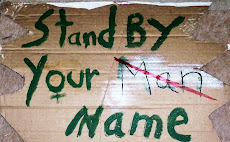
The headline reads:
Tel Aviv continues to fine store owners open on Shabbat in mostly non-Jewish areas
First of all, it should have read:
Tel Aviv continues to fine stores open on Jewish Sabbath in mostly non-Jewish areas
This is a classic example of the absurdity of blue laws. First of all, they assume — once again — that we can define who is a Jew. Do the city inspectors ask all the males in the ‘hood to show them their circumcisions? What about females? Just for the record, when I made aliya, I was never asked to provide “proof” of my Jewishness. Mom’s ketuba? Suppose Mom was never married. And by the way, I'm still dying to know if, when an ultra-Orthodox couple goes to the rabbinate to register, are they asked for their mothers' ketubas? Hard to believe, but if anyone knows the answer, do tell.
Let's just admit it: There is no way of proving an individual’s Judaism. Hard as it is after centuries of it going unchallenged, it is incumbent upon us to make a paradigmal shift: Anyone who feels herself to be and identifies as Jewish — is Jewish. And axiomatically: Anyone who wants to relocate to Israel should be subject to immigration regulations that do not relate to religion. It’s not that our current arrangement is racist, as some claim it is; it’s that it's simply illogical and untenable.
But for argument’s sake, let’s suppose that there were some way to definitively define — and identify — who is a Jew. It assumes some sort of universal database (managed by whom?), which in turn assumes some sort of ID carried on one’s person (biometric?), but just humor me here. How do we determine that a given neighborhood is “mostly Jewish”? By resident? By household? Because members of the same household might not all be Jewish. So, as soon as the 51st Jewish resident / household moves in (monitored by whom?), an alarm goes off at City Hall and the inspectors come to fine the store owner?
This is one area where market forces should be allowed free play. If someone is foolish enough to try to open a store on Saturday in an ultra-Orthodox neighborhood, they will be open about five minutes, or the time it takes for the neighbors to organize to 1) slash the store owner’s tires 2) shatter the display window and 3) trash the place. Ergo, no one will agree to even insure the automobile or place of business of such an individual. Problem solved.
Any other (read: sane) locale should be open game, as long as ordinances are adhered to with regard to noise and parking, which they should be on all other days as well, no? And by the way: Whose taxes go to pay these city inspectors? Bingo: Yours and mine. Certainly not ultra-Orthodox citizens, who pay negative taxes. Nope. It’s the rest of us funding this circus. So let’s congratulate ourselves once again for allowing ourselves to be exploited by the Haredim.
A neighbor recently remarked to me about the Tal Law: “…but there should be room [in our society] for [full-time Torah study].” No problem. Plenty of room: tucked away in a yeshiva somewhere, financed by your father or father-in-law, or Sheldon Adelson. Not by me! Not by us.
Showing posts with label religious coercion; separation of church and state הפרדת דת ומדינה. Show all posts
Showing posts with label religious coercion; separation of church and state הפרדת דת ומדינה. Show all posts
Tuesday, February 7, 2012


Sunday, October 9, 2011
Separation, not "pluralism" הפרדה, לא "רב-השקפתיות
This news report was sent to me by a reader who knows that its contents would please me, and while they do, all these non-Orthodox groups struggling for recognition by the rabbinic establishment seem to me to miss the point, or at least my point. While it’s certainly a good thing that Jerusalem Police Chief Niso Shoham is committed to banning forced sex segregation in public, this should not be news. OK, so it made the news in the wake of last Succot’s public sex segregation in Mea Shearim. But what happens when a new police chief steps into the job? Supposing that s/he personally doesn’t take as deep offense at public sex segregation as does Shoham? Not only that, but should our energies, i.e., those of the non-Orthodox public, be aimed at banning sex segregation in ultra-Orthodox neighborhoods or performances or in private schools, where the audience in any case segregates voluntarily?
Would our energies not be better expended on struggling for changes that would benefit the masses? For instance, public transportation on Saturdays? I did a little research on the origins of this ban, and it appears that it began in 1948, with the birth of the state. Not only am I outraged that David Ben-Gurion wheeled and dealed us into this corner, but I’m astonished that a ban on public transportation was not met with a public outcry: After all, in 1948, hardly any Israelis owned cars! Agreeing to such a ban on most citizens’ one day off work amounted to nothing less than a violation of human rights, as it still does today.
Today the cry for transportation on Shabbat should be all the louder, as environmental consciousness is far higher, and with the majority of Israelis car owners, we should be doing our utmost to remove as many cars as possible from the roads, not add them. Moreover, trains are a perfect answer as far as not offending Orthodox sensibilities on Shabbat, as unlike buses, they’re out of everyone’s view.
The struggle to have non-Orthodox denominations recognized is misplaced. We should instead be working toward separation of church and state, period. I would even accept the European model, wherein state symbols are religious — i.e., the Swedish flag, the cross in the Italian courtroom — nor would I even mind the state offering religious services to those who seek them, i.e., marriage, divorce, mikveh. But the state’s role in our lives should end there.
The rabbinic establishment recognizing more and more denominations won’t get us anywhere as far as our daily lives are concerned; in fact, I don’t need or want their recognition. Instead, we need to address each rights violation as exactly that, and I propose beginning with public transportation on Saturdays and Jewish holidays, as inroads have already been made, i.e., interurban buses run to and from Eilat. Only such a hands-on strategy will get the state out of our personal business and allow us to conduct our daily lives like Westerners.
Friday, April 15, 2011
If this is "kashrut", count me out "נמאס לי "מכשרות
Yesterday Haaretz reported on events venues, specifically wedding halls, whose owners have been threatened with loss of their “kashrut” certifications if they host same-sex couples. Note that I put “kashrut” in quotes. The reason is that for me, kashrut is about the spirit, not just the letter, of the law, i.e., it involves ethics, not merely the gushpanka of some mashgiach that the meat and dairy utensils and work surfaces don’t make any contact.
For a certain portion of the public, kashrut certification is akin to an establishment’s certification that it has passed fire, building, and health codes. Accordingly, where secular consumers wouldn’t patronize an establishment lacking the first three, Orthodox consumers won’t patronize an establishment lacking the latter. So in effect, establishments operating without kashrut certification are the victims of an institutionalized boycott: A state-run agency — the rabbinate — is actually violating the law that guarantees freedom of occupation. Furthermore, the rabbinate is now in violation of the Nakba Law, which contains a clause prohibiting state-funded institutions from engaging in incitement. Because after all, what is refusal to host gays but incitement, as it implies that gays are untouchables?
I’m certain that if it hasn’t happened already, wedding halls will be threatened with losing their “kashrut” certificates if they host events wherein there is mixed dancing, or what is deemed morally abhorrent music or other entertainment. So what are we non-Orthodox to do? While turning to the courts is nice (assuming they decide in our favor), it’s time-consuming and costly. Instead, there is something we can do immediately, and that’s ceasing to view ourselves as victims of the Orthodox establishment, and starting to view ourselves exactly as the Orthodox, i.e., a consumer group with power.
A restaurant owner is quoted in the article as saying, “…he was not refused over the issue of kashrut certification,…[but rather because] there was sensitivity at his establishment over the issue of [same-sex] weddings because of his religious clientele.” Well you know what? I’m sensitive to insensitivity. I and my public — the non-Orthodox — have our “special needs” too: We have the “need” to not be complicit in intolerant practices. And the natural followup thereto is to counter-boycott, that is, to boycott venues that have kashrut certification.
Upon giving an affirmative reply to a couple’s inquiry, “Are you kosher?” and then hearing the prospective clients say, “Then no thanks, we’re not interested,” venue owners will sit up and pay attention far faster than they will to some verdict issued after having been dragged through the courts at a glacial pace.
As far as adhering to Jewish dietary restrictions, a certification-free place (they should actually hang signs that say “We’re kashrut-free. We welcome all clientele!”) can meet our needs. The client chooses the menu, after all; all it takes is choosing a meat-only / dairy-only menu that includes only permitted foods. If Orthodox guests are invited, let them do as they would if invited to any event: Decline, or attend but don’t eat, or eat what they deem acceptable (cold produce; soft drinks for instance). It’s not a host’s duty to ensure that every single guest’s dietary limitations are taken into account; it is a host’s duty to make sure to provide enough selection so that every guest can eat something; in any case, no one is going to starve.
Business owners listen to one thing: their bottom line. As soon as non-kosher businesses begin to realize that they’re a niche market, i.e., they serve a certain clientele, they’ll respond accordingly. But first, non-Orthodox consumers must take the initiative. We have to realize our power as a consumer group with our “special needs”, just the same as the Orthodox are recognized as consumers with their “special needs”. We need to fight Rabbinic Rule over our celebrations from the ground up — or shall we say, from the wallet up.
Friday, May 1, 2009
Yiddishe Kop, Where'd You Go? לאן הלך היידישע קופ
עברית
Couldn’t find the English online: “Protest, counter-protest planned over gender-segregated buses” by Yair Ettinger p. 4, Thursday April 24, 2009 Haaretz English tells of a protest in the Shmuel haNavi neighborhood of Jerusalem and a counter-protest by the Orthodox women’s group Kolech*, which is demanding that gender-separate buses be eliminated.
Not only has the establishment of the Jewish state granted the ultra-Orthodox inordinate power, as explained here, ironically, precisely here in the Jewish state, Jewish ingenuity and entrepreneurship among the ultra-Orthodox is atrophying.
By way of explanation, let’s imagine a hypothetical ultra-Orthodox Jew in New York City who decides that he’s fed up with the existing public transportation options because he’s uncomfortable with being in close proximity to women. Obviously, he does not have the option of demanding that the city provide him with “kosher” transportation options. What’s the obvious next step? Start his own!
He gets his commercial driver’s license, takes out a loan, obtains the necessary permits for routes, buys a couple of vans, hires a couple of drivers, and voila ― a parnassah! He can even expand into the Muslim neighborhoods and eventually his business will support his own family and perhaps even others: Everybody wins.
Meanwhile, here in the Holy Land, sadly, everybody’s losing. How much psychic energy has been expended on both sides of this confrontation? Isn’t it about time we found a “third way”, instead of “My Way / Your Way”? My suggestion to the women of Kolech and if they’re smart, all relevant authorities (the Industry & Trade and Transportation Ministries, for starters): Propose to the ultra-Orthodox demonstrators that they start their own transportation company, and outline the steps needed to get there. There it is again―that coaching thing: Figure out where you want to go and take positive steps to get there: Everyone wins.
*I have to take a moment here and award this group the Yam Erez Clever Business and NPO Names award for not calling themselves Re’ut; Ofek / Ofakim; Keshet; Gvanim; Zchut [or some form thereof]; or Yad [or some form thereof]. Good going, gals!
Wednesday, January 28, 2009
Why I Won't Compromise on Separating Church & State כפייה דתית: אין פשרה
MadJack 11* wrote:
“The onus on compromise is always on the one who has control of the limits.”
This quote caught my eye and of course I immediately thought of the two most conspicuous conflicts today: Israel and the Palestinians; and the Orthodox vs. non-Orthodox. I framed the latter as “versus” because I see it that way: As opposed to the other conflict, I don’t feel like “each side should give a little”. If applied to Israel and the Palestinians, it’s clear who controls the limits: the Israelis. Therefore, the onus is on us to compromise―not on us only, but on us ultimately.
Not the same with the Orthodox. If applied to the Orthodox, the onus is on them to compromise. They placed limits, i.e., public transit, retail, and entertainment on Shabbat; personal status, and reproductive freedom. Therefore, the onus is on them to give in. As long as I don’t prevent them from practicing their faith, or force them to violate the mitzvot, they should stay out of my wallet, my home, my womb, my life.
As far as I’m concerned, the word “compromise” doesn’t even belong in the discussion. What does “compromise” mean in this issue? That they’ll “permit” some buses and trains to run on Saturdays? Some stores and entertainment venues to open? Some citizens to marry / divorce? Some women to abort? Unacceptable. Even one victim of religious coercion is too many. I’m not willing to “compromise”, if that’s what you want to call accepting any incidence of religious coercion.
*a fellow commentator on Carolyn Hax’s column Tell Me About It
Subscribe to:
Posts (Atom)