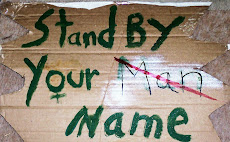
Yesterday while reading this article about gender studies programs in the schools, I was struck once again by the phenomenon of women feeling they have to soft-pedal feminism to men by reassuring them that it will benefit them too. Some quotes from the article: “It [sexism] is no less complicated for men: Men are expected to be strong…it [feminism] is about making a change, not just for ourselves, but for society as a whole.”
There we go again, arguing feminism by asserting that “Sexism hurts men too”, as if women’s rights are only legitimate if there’s something in it for the men too, as if feminism’s not enough on its own merit.
News flash: No group in power cedes its power simply to be nice to those lower in status. Believe me: If sexism truly hurt men, they would’ve eradicated it themselves long ago! Like all liberation movements, feminism is legitimate in its own right; it’s not obligated to offer men the Crackerjack prize of “It will benefit you too.”
While gender stereotypes certainly oppress some men, mankind as a whole benefits from the patriarchal structure. And make no mistake about it: Patriarchy is alive and well. Just yesterday a neighbor told me that one recent night she came across two young women swinging on a park swingset. Three teenage boys stood watching them, arms crossed in an intimidating pose. My neighbor took in the scene immediately, approached the boys, and told them unceremoniously to knock it off. Most likely the young women sensed that the boys were out of line, but also likely couldn’t put their finger on why, not yet having a name for it.
Note that the incident took place at night. That’s because — again, it’s implicit — the boys somehow knew that their behavior would be unacceptable in broad daylight, that intimidating females must be done under cover of darkness. And they knew good and well that’s what they were doing: intimidating. Yet the girls, not having the language for it, couldn’t call them on it. After all, the boys weren’t doing anything: They were neither touching the girls nor disrupting their play. But the boys didn’t have to do anything explicit: Both sides know the “rules”.
So no, these girls weren’t suffering wage discrimination or being deprived of Title IX funding or Goddess forbid, being harrassed (although only a thin line separates intimidation and harassment — kudos to my neighbor for intervening); but they were experiencing patriarchy nonetheless.
Where did these girls and these boys learn the “rules”? Who taught the girls that the boys’ behavior made them uncomfortable, yet there was no outward cause therefor? Who taught the boys that girls are objects to stare at, ogle, intimidate, see how far they could push the boundaries before an adult intervenes, an adult who has the words, the language to name these phenomena? No problem: They’ve been learning it since they emerged into this world, this society — this patriarchy.
I’m not afraid of that word, patriarchy. If you thought it refers only to the Taliban, you’d be wrong. It’s easy to get smug when we read about Taliban-style patriarchy; after all, we’re civilized: We’re not like them. But the Taliban simply lies at the extreme end of the gender non-/parity spectrum. Our goal should be to eradicate all manifestations of patriarchy, including those such as the boys’ behavior in the park that can’t be legislated. And we need men to be our partners therein, but not because they’re going to get something out of it “too”, but rather because gender parity is The Right Thing To Do.
This post powered by the book that now heads my daughters’ Compulsory Reading Booklist: How To Be a Woman by Caitlan Moran
Wednesday, August 29, 2012


Monday, August 27, 2012
Roommates w/Benefits? שותפים עם "הטבות"
While this editorial by Shahar Ilan isn’t breaking news, what it does do is break the ultra-Orthodox curriculum down for us Dummies. In it, we learn that the phenomenon of the ultra-Orthodox thumbing their noses at the core curriculum largely occurs in the boys’ schools; while the girls learn a certain level of English, math, and geography.
After they are married, the men are sequestered in yeshivas while the women get paying jobs where they use their skills, however paltry. So not only are the wives more educated than their husbands (in the Western sense of the word), but they are necessarily wordlier, being exposed to and in daily contact with the broader society.
What’s interesting to me is the effect this has on the marital relationship. I would guess that this arrangement actually infantilizes the men, relegating them to something akin to Eldest Child instead of Equal Partner. After all, plenty of ultra-Orthodox as young as ages seven or eight (the girls in particular) are already taking responsibility for the running of the household, including of course caring for younger siblings.
So what must it be like to have no substantial role in the family? You come home to a wife who earns the income and pays the bills, and a household run by increasingly competent offspring. Talk about emasculating: The only thing you’ve contributed to this enterprise is your sperm.
And we haven’t even talked about what the husband and wife talk about to each other: They might as well live on separate planets. On the other hand, in a setup like this, who needs to talk? Seems to me the above-described arrangement is pretty much Roommates With Benefits, no?
After they are married, the men are sequestered in yeshivas while the women get paying jobs where they use their skills, however paltry. So not only are the wives more educated than their husbands (in the Western sense of the word), but they are necessarily wordlier, being exposed to and in daily contact with the broader society.
What’s interesting to me is the effect this has on the marital relationship. I would guess that this arrangement actually infantilizes the men, relegating them to something akin to Eldest Child instead of Equal Partner. After all, plenty of ultra-Orthodox as young as ages seven or eight (the girls in particular) are already taking responsibility for the running of the household, including of course caring for younger siblings.
So what must it be like to have no substantial role in the family? You come home to a wife who earns the income and pays the bills, and a household run by increasingly competent offspring. Talk about emasculating: The only thing you’ve contributed to this enterprise is your sperm.
And we haven’t even talked about what the husband and wife talk about to each other: They might as well live on separate planets. On the other hand, in a setup like this, who needs to talk? Seems to me the above-described arrangement is pretty much Roommates With Benefits, no?
Monday, July 30, 2012
Eurocentrism in the flesh ?צבע גוף" -- גוף של מי"
Following my previous post about skin, this post talks about another aspect thereof: skin tone. Having renamed its "Flesh" hue "Peach" in 1962, Crayola crayons (the final authority on hues for those of us who grew up using them . Who can forget Burnt Sienna?) inspired me to set an example for my children. Whenever my kids would refer to *tzeva guf* [Hebrew for "flesh tone" - see ad on left, received by mail just this week, a mere 50 years after Crayola's landmark move], I'd shoot back, "Whose skin? Plony's? Almony's? [ficticious names of real kids they know of African ancestry]".
My receipt of the infamous ad pictured here was conincidentally preceded by a letter forwarded to me, the original of which עברית follows my English translation below:
Morán Siáness wonders: When a pharma company manufactures a product for women in “flesh tone”, whose flesh do they mean?
"On my way to the pharmacy, I pondered whether I’d sought freedom, or if it was just an illusion. For years I’ve had a complicated relationship with It, and now we were parting ways. My side of the deal was to take It every day at the same time. For years I’ve disappointed It, and for Its part, It’s taken revenge on me in various ways. I’ve promised to change: This time’ll be different, I's vow. And again I disappoint It, and so on and so forth.
After many long years, I decided to say goodbye to my birth control pill. On my path to freedom, it was impossible not to think of a dear woman, Margaret Sanger, founder of the birth control movement. Sanger was active at the end of the 19th century in raising funds for researching the first birth control pill. While I owe her a debt of gratitude for enabling me total authority over my body now I mumbled to myself: It’s time to move on to the Last Word in Ovulation Suppression.
The pharmacist smiled at me, revealing a row of white teeth that sparkled against his chocolate skin, and I, out of politeness, smiled back while handing him my prescription. With skilled confidence, he handed me with a small package and began typing on his keyboard. Suddenly, I began pondering where I’d adhere the patch on my body. My choices are: rear end, belly, limbs, and upper back. The last two are visible; my belly’s not an option, and so I’m left with the only option left.
While waiting, I review the patch’s advantages that my gynecologist had named. One of them, she said, is that it comes in “flesh tone”, so that it’s “invisible”. “Tell me,” I turned to the pharmacist. “Does the patch come in a range of skin tones?” His teeth, which had previously sparkled against his chocolate skin, no longer sparkled against his now-pale face. “That’s right,” I continued talking in order to dissipate the embarrassing silence. “I mean it.”
“No,” he replied. “It comes in one tone: regular.”
Regular? I thought. Whose “regular”? Mine -- the dark Middle Eastern Jewish “regular”? Or perhaps yours, the Arab “regular’”?
But his answer had already made things crystal clear: 70% — that’s over two thirds — of the world’s footwear is manufactured in China. Yet no Chinese has ever been heard to say to an American, “Sorry, Sir, but our local standard size is 8. So sorry: No shoes for you, Bigfoot. Good day!”
My birth control patch is manufactured in Belgium, where most people are fair-skinned. But so what? All of the cosmetic manufacturers have figured out that there is no single skin tone; no such thing exists. Therefore, since they want to sell makeup, they manufacture it in a wide range of skin tones. So how is it a manufacturer of a medical product presumably aimed at the entire spectrum of the world’s women, hasn’t figured out the same thing?
All of you who are still skeptical and are suggesting that perhaps the hue of the patch reflects the “average global skin tone” are hereby invited to peruse this map, or simply accept the answer: No! “Standard skin tone” as reflected by the map bears no similarity to the little square that I purchased at the pharmacy!
Now let’s talk economics: If it’s not economical to manufacture the patch in several tones, then why doesn’t it come in the actual “global average tone”? I have yet to find the answer. Does Janssen, the Ortho Evra patch’s manufacturer, not see fit to take into consideration the countries that lie east and south of Belgium? Do Middle Eastern and Asian woman not seek the latest in birth control?
It’s easy for me to raise these questions when I’m not directly in the gaze of those who believe that I’m making a mountain out of a molehill. It’s intimidating to encounter head-on an environment where on the one hand such thoughts can’t be expressed aloud, as it immediately brands me as an angry minority member or even worse, a feminist; and on the other hand negates my right to express my femaleness, which I’m unwilling to have taken from me — a femaleness of power, tenderness, love, and longing to be seen as I am: a woman, a Jew, a feminist, a Mizrachit [Jew of Middle Eastern ancestry], a non-owner of fair skin the tone of my patch.
I sought freedom, and en route thereto I found myself in a fixed reality wherein there is no black and white, but white only. I’m reminded of the character Layla in Radu Mihaileanu’s “The Source”, a film dealing with the many layers of humanity in general and of femaleness in particular. Layla decides to organize the women of her North African village to struggle against the tradition of paying the “price” in [miscarried] fetuses to fetch water from up the mountain. I wonder how Layla would have reacted to what I’ve written here. I wonder what counsel she’d give me; and my heart yearns for a man like her partner Sami, who would tell me, as he told Layla, “You’re my princess. It’s your right to fight.”
 . Who can forget Burnt Sienna?) inspired me to set an example for my children. Whenever my kids would refer to *tzeva guf* [Hebrew for "flesh tone" - see ad on left, received by mail just this week, a mere 50 years after Crayola's landmark move], I'd shoot back, "Whose skin? Plony's? Almony's? [ficticious names of real kids they know of African ancestry]".
My receipt of the infamous ad pictured here was conincidentally preceded by a letter forwarded to me, the original of which עברית follows my English translation below:
Morán Siáness wonders: When a pharma company manufactures a product for women in “flesh tone”, whose flesh do they mean?
"On my way to the pharmacy, I pondered whether I’d sought freedom, or if it was just an illusion. For years I’ve had a complicated relationship with It, and now we were parting ways. My side of the deal was to take It every day at the same time. For years I’ve disappointed It, and for Its part, It’s taken revenge on me in various ways. I’ve promised to change: This time’ll be different, I's vow. And again I disappoint It, and so on and so forth.
After many long years, I decided to say goodbye to my birth control pill. On my path to freedom, it was impossible not to think of a dear woman, Margaret Sanger, founder of the birth control movement. Sanger was active at the end of the 19th century in raising funds for researching the first birth control pill. While I owe her a debt of gratitude for enabling me total authority over my body now I mumbled to myself: It’s time to move on to the Last Word in Ovulation Suppression.
The pharmacist smiled at me, revealing a row of white teeth that sparkled against his chocolate skin, and I, out of politeness, smiled back while handing him my prescription. With skilled confidence, he handed me with a small package and began typing on his keyboard. Suddenly, I began pondering where I’d adhere the patch on my body. My choices are: rear end, belly, limbs, and upper back. The last two are visible; my belly’s not an option, and so I’m left with the only option left.
While waiting, I review the patch’s advantages that my gynecologist had named. One of them, she said, is that it comes in “flesh tone”, so that it’s “invisible”. “Tell me,” I turned to the pharmacist. “Does the patch come in a range of skin tones?” His teeth, which had previously sparkled against his chocolate skin, no longer sparkled against his now-pale face. “That’s right,” I continued talking in order to dissipate the embarrassing silence. “I mean it.”
“No,” he replied. “It comes in one tone: regular.”
Regular? I thought. Whose “regular”? Mine -- the dark Middle Eastern Jewish “regular”? Or perhaps yours, the Arab “regular’”?
But his answer had already made things crystal clear: 70% — that’s over two thirds — of the world’s footwear is manufactured in China. Yet no Chinese has ever been heard to say to an American, “Sorry, Sir, but our local standard size is 8. So sorry: No shoes for you, Bigfoot. Good day!”
My birth control patch is manufactured in Belgium, where most people are fair-skinned. But so what? All of the cosmetic manufacturers have figured out that there is no single skin tone; no such thing exists. Therefore, since they want to sell makeup, they manufacture it in a wide range of skin tones. So how is it a manufacturer of a medical product presumably aimed at the entire spectrum of the world’s women, hasn’t figured out the same thing?
All of you who are still skeptical and are suggesting that perhaps the hue of the patch reflects the “average global skin tone” are hereby invited to peruse this map, or simply accept the answer: No! “Standard skin tone” as reflected by the map bears no similarity to the little square that I purchased at the pharmacy!
Now let’s talk economics: If it’s not economical to manufacture the patch in several tones, then why doesn’t it come in the actual “global average tone”? I have yet to find the answer. Does Janssen, the Ortho Evra patch’s manufacturer, not see fit to take into consideration the countries that lie east and south of Belgium? Do Middle Eastern and Asian woman not seek the latest in birth control?
It’s easy for me to raise these questions when I’m not directly in the gaze of those who believe that I’m making a mountain out of a molehill. It’s intimidating to encounter head-on an environment where on the one hand such thoughts can’t be expressed aloud, as it immediately brands me as an angry minority member or even worse, a feminist; and on the other hand negates my right to express my femaleness, which I’m unwilling to have taken from me — a femaleness of power, tenderness, love, and longing to be seen as I am: a woman, a Jew, a feminist, a Mizrachit [Jew of Middle Eastern ancestry], a non-owner of fair skin the tone of my patch.
I sought freedom, and en route thereto I found myself in a fixed reality wherein there is no black and white, but white only. I’m reminded of the character Layla in Radu Mihaileanu’s “The Source”, a film dealing with the many layers of humanity in general and of femaleness in particular. Layla decides to organize the women of her North African village to struggle against the tradition of paying the “price” in [miscarried] fetuses to fetch water from up the mountain. I wonder how Layla would have reacted to what I’ve written here. I wonder what counsel she’d give me; and my heart yearns for a man like her partner Sami, who would tell me, as he told Layla, “You’re my princess. It’s your right to fight.”
עברית:
מורן סיאנס תוהה: כשחברת תרופות מייצרת מוצר לנשים בצבע ״סטנדרטי״, לאיזה צבע היא מתכוונת?
בדרכי לבית המרקחת, הרהרתי לי אם חופש ביקשתי לעצמי, או שזו רק עוד אשליה. שנים שאני מנהלת איתה מערכת יחסי מורכבת, ועכשיו אנחנו הולכות להיפרד. המחויבות שלי הייתה לקחת אותה כל יום באותה השעה. שנים שאני מאכזבת אותה, היא מצדה מתנקמת בי בצורות שונות, אני מבטיחה לה להשתנות: שהפעם יהיה זה אחרת; ושוב אני מאכזבת אותה וחוזר חלילה.
מורן סיאנס תוהה: כשחברת תרופות מייצרת מוצר לנשים בצבע ״סטנדרטי״, לאיזה צבע היא מתכוונת?
בדרכי לבית המרקחת, הרהרתי לי אם חופש ביקשתי לעצמי, או שזו רק עוד אשליה. שנים שאני מנהלת איתה מערכת יחסי מורכבת, ועכשיו אנחנו הולכות להיפרד. המחויבות שלי הייתה לקחת אותה כל יום באותה השעה. שנים שאני מאכזבת אותה, היא מצדה מתנקמת בי בצורות שונות, אני מבטיחה לה להשתנות: שהפעם יהיה זה אחרת; ושוב אני מאכזבת אותה וחוזר חלילה.
אחרי שנים ארוכות, החלטתי להיפרד מהגלולה שלי. בדרכי אל החופש, לא יכולתי שלא לחשוב על אישה יקרה, מרגרט סנגר, מייסדת התנועה לפיקוח הילודה. סנגר פעלה בסוף המאה ה19 למציאת מקורות מימון ע”מ לאפשר את פיתוח הגלולה הראשונה למניעת הריון. הודיתי לה בלבי על שאפשרה לי את הריבונות המוחלטת על גופי, אבל עכשיו, מלמלתי לעצמי, הגיע הזמן להתקדם ולעבור למילה האחרונה בשוק קוטלי הביוץ שלי.
הרוקח חייך אליי, חיוך רחב שחושף את לובן השיניים, שמנצנץ לנגד העור השוקולדי שלו, ואני מתוך נימוס, חייכתי חזרה, תוך שאני מגישה לו את המרשם החדש. במיומנות מדויקת, הוא נגש אליי עם קופסה קטנה והחל מתקתק על המקלדת. לפתע, התחלתי להרהר בשאלה, היכן אניח את המדבקה על גופי? האזורים היחידים בהם ניתן להניח אותה הם הישבן, הבטן, הזרוע, או הגב העליון. השניים האחרונים חשופים למראית עין, הבטן לא אופציה עבורי, ומהפח אל הפחת, נשארתי רק עם האופציה של ה...בעודי ממתינה, ניסיתי להיזכר ביתרונותיה של המדבקה, כפי שמנתה אותם בפניי רופאת הנשים. אחד מהם, אמרה כמי שנפעמת מפלאי הטכנולוגיה, הוא שהיא מגיעה בצבע של הגוף, כך שלא רואים אותה. תגיד, חזרתי אל הרוקח, המדבקה מגיעה במגוון צבעי העור?
לובן השיניים, שהפעם נחשף מחיוך נבוך, כבר לא נצנץ אל מול חיוורון פניו. "כן," המשכתי לדבר כדי להפיג את השתיקה המביכה. "אני שואלת ברצינות."
לא," הוא ענה לי. "זה מגיע בצבע אחד רגיל."
רגיל? תהיתי לעצמי. רגיל של מי? שלי, המזרחית השזופה, או שלך, הערבי השחום? אבל התשובה כבר הייתה לי ברורה.למעלה משני שלישים — 70% — משוק הנעליים העולמי מיוצר בסין. אולם, לעולם לא נשמע אף סיני אומר לאמריקאי, "סליחה, אדוני, אבל פה הסטנדרט במידות הנעליים הוא 38, ולכן עבורך, שכמוך, אין לנו נעליים. תודה ושלום."
Bigfoot.
המדבקה מיוצרת בבלגיה, מדינה אירופאית, זה נכון. בלגיה היא מדינה שמרבית תושביה בעלי גוון עור בהיר, גם זה נכון. אבל מה? אפילו כל חברות הקוסמטיקה למיניהן השכילו להבין שאין, פשוט אין, גוון עור אחד. לכן, כשהן רוצות לשווק איפור, הן תייצרנה אותו במגוון רחב של צבעי עור. אז איך יתכן שחברה שמשווקת תכשיר רפואי, שמיועד לקשת רחבה של נשים, לא השכילה להבין שאין גוון עור אחד?לכל אותם אנשים שגבתם עדיין מורמת גבוה, והשאלה, אולי צבע המדבקה משקף את ממוצע צבע העור בעולם, שוכנת בליבם, אתם מוזמנים לעיין במפה המצורפת או פשוט לקבל את התשובה: לא! "הצבע הסטנדרטי" אינו דומה לריבוע החיוור שקיבלתי!
והנה נפטרה לה גם השאלה הכלכלית: הרי שאם זה לא כלכלי לייצר מספר גוונים, אזי מתבקש היה לייצר את המדבקה ע”פ צבע העור הממוצע בעולם. אולם, לשאלותיי טרם מצאתי תשובה. האם חברת התרופות הזו, בייצרה את המדבקה, לא מצאה לנכון להחשיב גם את המדינות ששוכנות מזרחית ו דרומית לה? שמא הנשים במזרח לא זקוקות לאמצעי מניעה חדישים?כמה קל לי להעלות את מחשבותיי מבלי להיתקל במבטיהם המאיימים של מי שחושבים שאני מגזימה או משוגעת. מפחיד כל כך להיפגש עם סביבה שכל מחשבה כזו שנאמרת בקול רם, מייד מתייגת אותי כמזרחית שסובלת מרגשי קיפוח או כפמיניסטית רדיקאלית [מהי הבעיה בפמיניזם רדיקאלי? - י.א.] ושוללת ממני במקביל את הזכות לבטא נשיות שאיני מוכנה שתילקח ממני: נשיות שיש בה עוצמה, רכות, אהבה, וכמיהה שיראו אותי כפי שאני; אישה, יהודייה, פמיניסטית, מזרחית, בעלת עור אחר מהסטנדרט הבהיר של המדבקה הזו.
המדבקה מיוצרת בבלגיה, מדינה אירופאית, זה נכון. בלגיה היא מדינה שמרבית תושביה בעלי גוון עור בהיר, גם זה נכון. אבל מה? אפילו כל חברות הקוסמטיקה למיניהן השכילו להבין שאין, פשוט אין, גוון עור אחד. לכן, כשהן רוצות לשווק איפור, הן תייצרנה אותו במגוון רחב של צבעי עור. אז איך יתכן שחברה שמשווקת תכשיר רפואי, שמיועד לקשת רחבה של נשים, לא השכילה להבין שאין גוון עור אחד?לכל אותם אנשים שגבתם עדיין מורמת גבוה, והשאלה, אולי צבע המדבקה משקף את ממוצע צבע העור בעולם, שוכנת בליבם, אתם מוזמנים לעיין במפה המצורפת או פשוט לקבל את התשובה: לא! "הצבע הסטנדרטי" אינו דומה לריבוע החיוור שקיבלתי!
והנה נפטרה לה גם השאלה הכלכלית: הרי שאם זה לא כלכלי לייצר מספר גוונים, אזי מתבקש היה לייצר את המדבקה ע”פ צבע העור הממוצע בעולם. אולם, לשאלותיי טרם מצאתי תשובה. האם חברת התרופות הזו, בייצרה את המדבקה, לא מצאה לנכון להחשיב גם את המדינות ששוכנות מזרחית ו דרומית לה? שמא הנשים במזרח לא זקוקות לאמצעי מניעה חדישים?כמה קל לי להעלות את מחשבותיי מבלי להיתקל במבטיהם המאיימים של מי שחושבים שאני מגזימה או משוגעת. מפחיד כל כך להיפגש עם סביבה שכל מחשבה כזו שנאמרת בקול רם, מייד מתייגת אותי כמזרחית שסובלת מרגשי קיפוח או כפמיניסטית רדיקאלית [מהי הבעיה בפמיניזם רדיקאלי? - י.א.] ושוללת ממני במקביל את הזכות לבטא נשיות שאיני מוכנה שתילקח ממני: נשיות שיש בה עוצמה, רכות, אהבה, וכמיהה שיראו אותי כפי שאני; אישה, יהודייה, פמיניסטית, מזרחית, בעלת עור אחר מהסטנדרט הבהיר של המדבקה הזו.
חופש ביקשתי לי, ומצאתי עצמי במציאות מקובעת, שאין בה, גם לא שחור או לבן, אלא רק לבן. אני חושבת על דמותה של ליילה, בסרטו של ראדו מיכאלינו "מים ואהבה". סרט על רבדים שונים באנושיות בכלל ובנשיות בפרט. ליילה החליטה לעורר את נשות הכפר שבצפון אפריקה ולקרוא להן לפעול ע”מ לשנות מסורת רבת שנים שבה הן משלמות במחיר עוּבּריהן כדי לשאוב מים ממעלה ההר. מעניין איך היא הייתה מגיבה אילו הייתה קוראת את מילותיי עכשיו. בראשי, תוהה מה היה לה לייעץ לי, ובלבי, כמהה לבחור, כמו זה שהיה לצידה, סאמי, שיגיד גם לי "את הנסיכה שלי. יש לך הזכות להלחם".
Tuesday, July 17, 2012
Hijab: Repressive, or liberating? רעלה: מדכאה, או משחררת
I found this piece on wearing a hijab interesting. In short, while I respect Nusrat's decision and wouldn't attempt to dispute it, it seems to me that countering provocative / revealing dress disguised as feminism or liberation with uncomfortable, over-covering garb doesn't really solve the problem of objectification or of promiscuity, does it?
Where I completely agree with Nusrat is where she says that her hijab conveys, “I control what you see”. I contend that the young woman who lets it all hang out, while claiming that she’s in control, is actually a victim of Western culture (mostly via advertising, which is mainly devised by men) telling her what she should allow us to see. How is that empowering? Yet for me, the antidote to promiscuity is not repression, or throwing on a burlap bag and “disappearing” the whole fashion question, but rather feminism, which I see as encompassing educating girls and young women to recognize objectification and exploitation while citing strategies they can use to achieve balance between asserting themselves and loving their bodies and ending up puppets of the corporate world.
As I wrote in an earlier post, while women and girls who dress revealingly get attention alright, they don’t get taken seriously. There’s a reason your attorney doesn’t show up in court showing cleavage, or your physician doesn’t make her rounds in Daisy Dukes. Our sexual parts are there, naturally; but just as we don’t use them in public, we don’t have to advertise them to the world. Does the physician walk around wearing her stethoscope outside the work setting? Does the attorney bring her briefcase to a party? I also question the claim that dressing revealingly is comfortable: I used to wear tube tops, and recall the relief at removing them at the end of the day: No more tugging and itching. And thongs? How comfortable is it walking around with fabric up your crack?
However, I’m not convinced the antidote to fashion slavery is to cover up a la hijab or burka, or long sleeves and stockings in 40 c. heat, a la Orthodox Jewish women, which to me are as uncomfortable as tube tops, if not more. Instead, what I tried to do with my own daughters was to introduce to them the shocking concept that “appealing” need not be synonymous with “sexy”. The obvious place to start was synagogue wear: “No, you may not bare your stomach / wear spaghetti straps / a miniskirt to shul”. Eventually they would put on an outfit and ask me, “Ima, is this OK for shul?” I’d point out any “transgressions”, and back they went to the closet to correct them. Of their own volition, they wear boxers over their (two-piece) swimsuit bottoms, because they feel more comfortable that way. I’d rather they wear one-piece swimsuits, but I accept their solution because I believe that giving them choices within reason is as important as their not looking like streetwalkers. And what do you know? They dress appealingly, yet not provocatively. They internalized the difference.
It’s all relative, of course I realize. My daughters’ elbows and knees are exposed, which is considered revealing in fundy circles. But their sexual parts are covered up, and they are therefore more likely to be taken seriously and less likely to be ogled than are young women whose same parts are hanging out there for all to see. And so I feel I’ve succeeded in transmitting to them the concept of dressing appropriately. In fact, I can’t recall a single battle over an item of clothing, either while clothes shopping or post-purchase. Of course, I began “rolling the tapes” early on about our bodies, objectification and exploitation, women’s images in advertising, and so forth. So my restrictions in dress — which don’t even look like restrictions to them — didn’t take place in a vacuum. This is what has worked for me, and what I recommend parents try.
The lines from Nusrat’s piece that struck a chord in me read: “I am … absolutely certain that the skewed perception of women’s equality as the right to bare our breasts [or other parts, as much as we can get away with - Y.E.] in public only contributes to our own objectification. I look forward to a whole new day when true equality will be had with women not needing to display themselves to get attention.” I wish Nusrat a pleasant journey in her new identity as a hijabi [shouldn’t there be a feminine form of that word?]. When all’s said and done, our society already shows plenty of collective skin. If it’s possible to err, let it be on the side of less skin being revealed, not more.
Where I completely agree with Nusrat is where she says that her hijab conveys, “I control what you see”. I contend that the young woman who lets it all hang out, while claiming that she’s in control, is actually a victim of Western culture (mostly via advertising, which is mainly devised by men) telling her what she should allow us to see. How is that empowering? Yet for me, the antidote to promiscuity is not repression, or throwing on a burlap bag and “disappearing” the whole fashion question, but rather feminism, which I see as encompassing educating girls and young women to recognize objectification and exploitation while citing strategies they can use to achieve balance between asserting themselves and loving their bodies and ending up puppets of the corporate world.
As I wrote in an earlier post, while women and girls who dress revealingly get attention alright, they don’t get taken seriously. There’s a reason your attorney doesn’t show up in court showing cleavage, or your physician doesn’t make her rounds in Daisy Dukes. Our sexual parts are there, naturally; but just as we don’t use them in public, we don’t have to advertise them to the world. Does the physician walk around wearing her stethoscope outside the work setting? Does the attorney bring her briefcase to a party? I also question the claim that dressing revealingly is comfortable: I used to wear tube tops, and recall the relief at removing them at the end of the day: No more tugging and itching. And thongs? How comfortable is it walking around with fabric up your crack?
However, I’m not convinced the antidote to fashion slavery is to cover up a la hijab or burka, or long sleeves and stockings in 40 c. heat, a la Orthodox Jewish women, which to me are as uncomfortable as tube tops, if not more. Instead, what I tried to do with my own daughters was to introduce to them the shocking concept that “appealing” need not be synonymous with “sexy”. The obvious place to start was synagogue wear: “No, you may not bare your stomach / wear spaghetti straps / a miniskirt to shul”. Eventually they would put on an outfit and ask me, “Ima, is this OK for shul?” I’d point out any “transgressions”, and back they went to the closet to correct them. Of their own volition, they wear boxers over their (two-piece) swimsuit bottoms, because they feel more comfortable that way. I’d rather they wear one-piece swimsuits, but I accept their solution because I believe that giving them choices within reason is as important as their not looking like streetwalkers. And what do you know? They dress appealingly, yet not provocatively. They internalized the difference.
It’s all relative, of course I realize. My daughters’ elbows and knees are exposed, which is considered revealing in fundy circles. But their sexual parts are covered up, and they are therefore more likely to be taken seriously and less likely to be ogled than are young women whose same parts are hanging out there for all to see. And so I feel I’ve succeeded in transmitting to them the concept of dressing appropriately. In fact, I can’t recall a single battle over an item of clothing, either while clothes shopping or post-purchase. Of course, I began “rolling the tapes” early on about our bodies, objectification and exploitation, women’s images in advertising, and so forth. So my restrictions in dress — which don’t even look like restrictions to them — didn’t take place in a vacuum. This is what has worked for me, and what I recommend parents try.
The lines from Nusrat’s piece that struck a chord in me read: “I am … absolutely certain that the skewed perception of women’s equality as the right to bare our breasts [or other parts, as much as we can get away with - Y.E.] in public only contributes to our own objectification. I look forward to a whole new day when true equality will be had with women not needing to display themselves to get attention.” I wish Nusrat a pleasant journey in her new identity as a hijabi [shouldn’t there be a feminine form of that word?]. When all’s said and done, our society already shows plenty of collective skin. If it’s possible to err, let it be on the side of less skin being revealed, not more.
Friday, June 22, 2012
My response to Dr. Denis MacEoin's plea to Alice Walker to reconsider her embargo of Israeli readers
Dear Dr. MacEoin,
I read your letter to Alice Walker, to which my specific responses are interspersed in red. I'm an American immigrant to Israel, having moved here in 1981. I love my country fiercely. I raised three children here, the second of whom is now serving in the IDF. The first finished her IDF service (both did a year of volunteer work with under-served populations before their IDF service) and next month is going abroad to work with Jewish youth and get them excited about Israel. And there's lots to be excited about! I love it here, and have zero regrets about coming. Yet I regret what we've become.
I won't go into all of Israel's ills here; instead, I'll take a different tack: Walker's refusal to publish TCP in Hebrew is a huge, shortsighted pity, yet not for the reasons you set forth below. It's indefensible for the simple reason that she's an acclaimed writer who writes about victimhood and bigotry. She has opened readers' eyes and brought light into the world. How then, can she "in the same breath" refuse to bring that same light and enlightenment to Israeli readers, whom she accuses of darkness? How can a writer, who's raison d'etre is to disseminate ideas, act to block the dissemination of ideas -- her own ideas? She's erecting a checkpoint more disgraceful than any checkpoint in the West Bank. And that's the beginning and the end of it.
Before you read my interspersed comments below, I want to say that I made a point of visiting not only Ireland, but Northern Ireland, six years ago, where I was nothing less than humbled at the progress that's been made peace-wise, not to mention the prosperity. I came back "preaching" to everyone I know that Israelis, especially, should visit your incredible land and see with their own eyes the fruits of peace. You are an example to us. Bless you for your support. Please read below (scroll all the way down). Best, Yám Erez
Dr. Denis MacEoin writes:
["You may know that the American writer Alice Walker [The Colour Purple] has refused to allow a Hebrew translation of her best-known work, has expressed ugly feelings about Israel, previously wanted to go on the Gaza flotilla, and sides with the Palestinian position. Given that she has a reputation for open-mindedness and courage when confronting prejudice, her attitude is shocking. I have just sent her a letter in the hope of shaking her complacency a little. It’s reproduced below."]
"Dear Ms Walker,
This is not a fan mail, though I wish it were. It is, equally, not a criticism of any of your books, which have said so much to so many. It is that very simple thing: a request to reconsider. I am, like yourself, a writer, having published (mainly with Harper Collins UK and US) over 25 novels under two different names. I am also a former academic in Arabic and Islamic Studies and a former editor of the Middle East Quarterly. I know the Middle East well, having lived in Iran and Morocco.I was, not to put too fine a point on it, shocked to the core to find that the sensitive author of The Color Purple and so many other books that speak to the heart has refused to allow a Hebrew translation of that first, classic story to be published. Nor was I less shocked to discover that an individual of your merit and generally sound political judgement had joined forces with groups and individuals who campaign against the state of Israel and treat it with the sort of contempt that would be better reserved for the countries that surround it.
You have spoken out against racism, yet you accuse a country that is visibly anti-racist [to me it appears visibly racist] to be the opposite of what it is. Please don’t dismiss what I say without further thought. It appears that you condemn Israel because it practices apartheid. Have you ever been to Israel? Have you ever walked Israeli streets, how about Hebron streets? spoken to Jewish and Arab Israelis, sought out clear signs of the apartheid you’ve been told you will find there? I do not think you have, for had you done so you would have been surprised by the absolute absence - do you mean Beitar Jerusalem fans' chants of "Death to the Arabs" and attacking Arabs in a mall? of any of the features of apartheid as it was applied by the South African government. That apartheid had as its principal aim the separation of blacks and whites and was hell for black people for decades. Though it pains me to say so, I find it offensive that you and other anti-Israel activists feel it necessary to indulge in an outright falsehood.
Think of South African apartheid and all its ramifications. Did blacks have the vote outside their ‘homelands’? Did they serve in parliament or as government ministers [who are regularly the objects of public mocking and bigotry]? Were they sent abroad as diplomats? Did they serve as judges?In Israel today, every Arab citizen has exactly the same right to vote and be elected as any Jewish citizen. There are Arab members of parliament. Arab members of the Cabinet. Arabs serving on the Supreme Court. Arab diplomats.
Beyond that, not one place is forbidden to Arab Israelis. They can sit in the same cinemas as Jews, swim in the same pools, run on the same beaches Except they face regular threats and harassment if they visit certain beaches, for just one example, eat in the same restaurants, attend the same universities where certain events are barred, such as Nakba Day memorials, lecture at those universities, lie on adjacent beds in the same wards in the same hospitals about the only place where there's pure equality. Palestinian children attend special educational courses alongside their Jewish peers and are taught the virtues of co-existence.
And speaking of Palestinian children, an Israeli charity called Save a Child’s Heart brings well over 200 pediatric cardiac cases and operates on them to save their lives. 40% of the SACH's beneficiaries are from Africa, 49% are from the Palestinian Authority, Jordan, Iraq and Morocco, 4% are from Eastern Europe and the Americas, and 7% are from Asia. And you call this an apartheid state well apparently doing good and apartheid can coexist. After all, where was the first heart transplant? The PA, Jordan, Iraq and Morocco are all sworn enemies of Israel who regularly call for its destruction and for the genocide of all Jews living there. Would an apartheid state save the lives of its enemies’ children or allow Palestinian women to give birth in its hospitals the lucky ones who manage to get through the checkpoints, side by side with Jewish women? Am I completely insane for thinking you have it all back to front?
You may well say to me, "What about Gaza? What about the West Bank?" Those are the places where apartheid takes place. But does it? Israel withdrew from Gaza in 2005, and in doing so exposed itself to year after year of rocket and mortar fire from Islamic Jihad and Hamas. The territory is currently under the control of Hamas, one of the world’s most dangerous terrorist entities. Israel has two functions there: to exercise a wholly legal legal does not equal moral sea and land blockade in order to prevent Hamas acquiring (mainly through tunneling) advanced weaponry, most of it supplied by Iran, another country that openly calls for genocide in Israel. To mitigate the impact of the blockade, Israel has set up a border control station, through which tons of goods pass into Gaza every week and through which Gazans are not allowed to go abroad to study or visit spouses in the West Bank. While life is not easy in Gaza, it is controlled by an armed group whose charter calls for the killing of Jews and rejects peace-making of any kind. This is many things, but it’s not apartheid.
The West Bank has nothing I would call apartheid. nothing? Taking over springs, roads, water sources, land for Jewish-only use? 96% of Palestinians live under the Palestinian Authority administration. Overall, Israel is responsible for security. For a period of many years, wave after wave of terror attacks have come out of the West Bank, most in the form of suicide bombings. To this day, Palestinian streets bear posters bearing the faces of suicide bombers; schools, streets, and squares are named after them, schoolchildren are taught to admire them, to write poems for them, and to aspire to martyrdom themselves. Are Palestinians on the West Bank treated badly? Probably. But how badly is badly? There is a war going on, a quiet war that nonetheless exposes civilians on both sides to constant danger. But the Palestinians have for over 60 years refused to take up the very fair deal offered them by the United Nations in 1947, and until they do so and establish a state that does not dream of the destruction of its neighbour simply because it is a Jewish state, there cannot be peace, there cannot be honest dialogue, and there cannot be a full programme of mutual assistance. So easy to shut the door, isn't it? *trach*! We're done!
Terrorism and war are the twin contexts within which all today’s problems lie. I'd add greed. It has been said, "If the Palestinians laid down their weapons, there would be peace tomorrow. If the Israelis laid down their weapons, there would be no Israel." I am writing to you because I believe you have shown yourself to be open-minded and attuned to context. You have taken a stand for gays, yet seem unaware that Israel is the only country in the Middle East where homosexuals enjoy full rights except to marry. And where venues are threatened with loss of kashrut certification if they host gays' events. and can celebrate their status in public in Tel Aviv and sometimes Eilat. Tel Aviv is rightly considered a "gay capital". Surely this is important to you. It's all important. Does it not go a long way toward refining your image of the Jewish state?I am a liberal (in the British sense at least), and Israel is the only country in the Middle East that pays more than lip service to the human rights in which we both believe. That's not hard. Are our neighbors the standard by which we want to measure ourselves? It bewilders me that someone as open-minded and open-hearted as yourself should choose to support the side of violence, of prejudice, of outright hatred. I don't see her as supporting violence and hatred. But withholding knowledge...that's bad. The only explanation that makes any sense to me is that you must be – as are so many of those who hate Israel – simply ignorant of the realities of life there. I do not say that to blame you; ignorance of the Middle East runs right through Western societies, from media pundits to presidents and prime ministers.
I could write pages more in an attempt to help you see reason, but I don’t think that would, in itself, achieve very much. You don’t want to be preached to, I’m certain of that – and I’ve already preached more than I intended at the outset of this letter. But we do share one thing and that is the power of imagination. It takes imagination to see beyond the dogmas on either side of an argument like this. Yes, exactly. Nuance. Shades of gray. And that is what I want you to do: use your imagination to see past the lies and obfuscations that have blinded many to what has really been going on between the Jews and the Arabs.
It is still not uncommon – particularly in Arabic writing and speech-making – for Israel’s enemies to refer to it as a Nazi state. This is commonplace. It occurs as often as not along with a deep ignorance of the genuinely unfathomable evil the Nazis wrought, with denial of the Holocaust, with street banners reading "Why didn’t Hitler finish the job?" and "God Bless Hitler". You will not need prompting from me to agree that this modern attempt to turn the tables on a people who suffered the Holocaust and now carry it in their genes is worthy of the strongest condemnation. But it is the Palestinians and their allies who voice these gruesome sentiments, and it is the Israelis who run charities to save children’s hearts, who send out aid missions to Haiti and Japan and Mali and throughout the world because they believe in humanity, who have helped feed most of Africa, who have produced one of the world’s most technologically advanced countries, who save lives everywhere with their medicines and medical devices. And don't forget drip irrigation. And Bamba. But good and evil are not mutually exclusive -- obviously. Ditto barbarism and civility. Read the Torah.
Please take this opportunity to revise your thoughts about Israel. If it should ever be destroyed – as its enemies fantasize it will be – it will be a disaster for us all. Find books, watch videos, cast your mind about to discover what Israel really is. Talk to some Jews, and not just those who are opposed to Israeli policy. Israel is not what you think it is, of that you can be sure. And if you would like to visit Israel and probe into things yourself, just let me know and I will help arrange it.Thank you for reading this far. If you take what I say seriously, you will be surprised by what you find, bright against what you thought you knew but did not.
Yours sincerely,
Dr. Denis MacEoin"
I read your letter to Alice Walker, to which my specific responses are interspersed in red. I'm an American immigrant to Israel, having moved here in 1981. I love my country fiercely. I raised three children here, the second of whom is now serving in the IDF. The first finished her IDF service (both did a year of volunteer work with under-served populations before their IDF service) and next month is going abroad to work with Jewish youth and get them excited about Israel. And there's lots to be excited about! I love it here, and have zero regrets about coming. Yet I regret what we've become.
I won't go into all of Israel's ills here; instead, I'll take a different tack: Walker's refusal to publish TCP in Hebrew is a huge, shortsighted pity, yet not for the reasons you set forth below. It's indefensible for the simple reason that she's an acclaimed writer who writes about victimhood and bigotry. She has opened readers' eyes and brought light into the world. How then, can she "in the same breath" refuse to bring that same light and enlightenment to Israeli readers, whom she accuses of darkness? How can a writer, who's raison d'etre is to disseminate ideas, act to block the dissemination of ideas -- her own ideas? She's erecting a checkpoint more disgraceful than any checkpoint in the West Bank. And that's the beginning and the end of it.
Before you read my interspersed comments below, I want to say that I made a point of visiting not only Ireland, but Northern Ireland, six years ago, where I was nothing less than humbled at the progress that's been made peace-wise, not to mention the prosperity. I came back "preaching" to everyone I know that Israelis, especially, should visit your incredible land and see with their own eyes the fruits of peace. You are an example to us. Bless you for your support. Please read below (scroll all the way down). Best, Yám Erez
Dr. Denis MacEoin writes:
["You may know that the American writer Alice Walker [The Colour Purple] has refused to allow a Hebrew translation of her best-known work, has expressed ugly feelings about Israel, previously wanted to go on the Gaza flotilla, and sides with the Palestinian position. Given that she has a reputation for open-mindedness and courage when confronting prejudice, her attitude is shocking. I have just sent her a letter in the hope of shaking her complacency a little. It’s reproduced below."]
"Dear Ms Walker,
This is not a fan mail, though I wish it were. It is, equally, not a criticism of any of your books, which have said so much to so many. It is that very simple thing: a request to reconsider. I am, like yourself, a writer, having published (mainly with Harper Collins UK and US) over 25 novels under two different names. I am also a former academic in Arabic and Islamic Studies and a former editor of the Middle East Quarterly. I know the Middle East well, having lived in Iran and Morocco.I was, not to put too fine a point on it, shocked to the core to find that the sensitive author of The Color Purple and so many other books that speak to the heart has refused to allow a Hebrew translation of that first, classic story to be published. Nor was I less shocked to discover that an individual of your merit and generally sound political judgement had joined forces with groups and individuals who campaign against the state of Israel and treat it with the sort of contempt that would be better reserved for the countries that surround it.
You have spoken out against racism, yet you accuse a country that is visibly anti-racist [to me it appears visibly racist] to be the opposite of what it is. Please don’t dismiss what I say without further thought. It appears that you condemn Israel because it practices apartheid. Have you ever been to Israel? Have you ever walked Israeli streets, how about Hebron streets? spoken to Jewish and Arab Israelis, sought out clear signs of the apartheid you’ve been told you will find there? I do not think you have, for had you done so you would have been surprised by the absolute absence - do you mean Beitar Jerusalem fans' chants of "Death to the Arabs" and attacking Arabs in a mall? of any of the features of apartheid as it was applied by the South African government. That apartheid had as its principal aim the separation of blacks and whites and was hell for black people for decades. Though it pains me to say so, I find it offensive that you and other anti-Israel activists feel it necessary to indulge in an outright falsehood.
Think of South African apartheid and all its ramifications. Did blacks have the vote outside their ‘homelands’? Did they serve in parliament or as government ministers [who are regularly the objects of public mocking and bigotry]? Were they sent abroad as diplomats? Did they serve as judges?In Israel today, every Arab citizen has exactly the same right to vote and be elected as any Jewish citizen. There are Arab members of parliament. Arab members of the Cabinet. Arabs serving on the Supreme Court. Arab diplomats.
Beyond that, not one place is forbidden to Arab Israelis. They can sit in the same cinemas as Jews, swim in the same pools, run on the same beaches Except they face regular threats and harassment if they visit certain beaches, for just one example, eat in the same restaurants, attend the same universities where certain events are barred, such as Nakba Day memorials, lecture at those universities, lie on adjacent beds in the same wards in the same hospitals about the only place where there's pure equality. Palestinian children attend special educational courses alongside their Jewish peers and are taught the virtues of co-existence.
And speaking of Palestinian children, an Israeli charity called Save a Child’s Heart brings well over 200 pediatric cardiac cases and operates on them to save their lives. 40% of the SACH's beneficiaries are from Africa, 49% are from the Palestinian Authority, Jordan, Iraq and Morocco, 4% are from Eastern Europe and the Americas, and 7% are from Asia. And you call this an apartheid state well apparently doing good and apartheid can coexist. After all, where was the first heart transplant? The PA, Jordan, Iraq and Morocco are all sworn enemies of Israel who regularly call for its destruction and for the genocide of all Jews living there. Would an apartheid state save the lives of its enemies’ children or allow Palestinian women to give birth in its hospitals the lucky ones who manage to get through the checkpoints, side by side with Jewish women? Am I completely insane for thinking you have it all back to front?
You may well say to me, "What about Gaza? What about the West Bank?" Those are the places where apartheid takes place. But does it? Israel withdrew from Gaza in 2005, and in doing so exposed itself to year after year of rocket and mortar fire from Islamic Jihad and Hamas. The territory is currently under the control of Hamas, one of the world’s most dangerous terrorist entities. Israel has two functions there: to exercise a wholly legal legal does not equal moral sea and land blockade in order to prevent Hamas acquiring (mainly through tunneling) advanced weaponry, most of it supplied by Iran, another country that openly calls for genocide in Israel. To mitigate the impact of the blockade, Israel has set up a border control station, through which tons of goods pass into Gaza every week and through which Gazans are not allowed to go abroad to study or visit spouses in the West Bank. While life is not easy in Gaza, it is controlled by an armed group whose charter calls for the killing of Jews and rejects peace-making of any kind. This is many things, but it’s not apartheid.
The West Bank has nothing I would call apartheid. nothing? Taking over springs, roads, water sources, land for Jewish-only use? 96% of Palestinians live under the Palestinian Authority administration. Overall, Israel is responsible for security. For a period of many years, wave after wave of terror attacks have come out of the West Bank, most in the form of suicide bombings. To this day, Palestinian streets bear posters bearing the faces of suicide bombers; schools, streets, and squares are named after them, schoolchildren are taught to admire them, to write poems for them, and to aspire to martyrdom themselves. Are Palestinians on the West Bank treated badly? Probably. But how badly is badly? There is a war going on, a quiet war that nonetheless exposes civilians on both sides to constant danger. But the Palestinians have for over 60 years refused to take up the very fair deal offered them by the United Nations in 1947, and until they do so and establish a state that does not dream of the destruction of its neighbour simply because it is a Jewish state, there cannot be peace, there cannot be honest dialogue, and there cannot be a full programme of mutual assistance. So easy to shut the door, isn't it? *trach*! We're done!
Terrorism and war are the twin contexts within which all today’s problems lie. I'd add greed. It has been said, "If the Palestinians laid down their weapons, there would be peace tomorrow. If the Israelis laid down their weapons, there would be no Israel." I am writing to you because I believe you have shown yourself to be open-minded and attuned to context. You have taken a stand for gays, yet seem unaware that Israel is the only country in the Middle East where homosexuals enjoy full rights except to marry. And where venues are threatened with loss of kashrut certification if they host gays' events. and can celebrate their status in public in Tel Aviv and sometimes Eilat. Tel Aviv is rightly considered a "gay capital". Surely this is important to you. It's all important. Does it not go a long way toward refining your image of the Jewish state?I am a liberal (in the British sense at least), and Israel is the only country in the Middle East that pays more than lip service to the human rights in which we both believe. That's not hard. Are our neighbors the standard by which we want to measure ourselves? It bewilders me that someone as open-minded and open-hearted as yourself should choose to support the side of violence, of prejudice, of outright hatred. I don't see her as supporting violence and hatred. But withholding knowledge...that's bad. The only explanation that makes any sense to me is that you must be – as are so many of those who hate Israel – simply ignorant of the realities of life there. I do not say that to blame you; ignorance of the Middle East runs right through Western societies, from media pundits to presidents and prime ministers.
I could write pages more in an attempt to help you see reason, but I don’t think that would, in itself, achieve very much. You don’t want to be preached to, I’m certain of that – and I’ve already preached more than I intended at the outset of this letter. But we do share one thing and that is the power of imagination. It takes imagination to see beyond the dogmas on either side of an argument like this. Yes, exactly. Nuance. Shades of gray. And that is what I want you to do: use your imagination to see past the lies and obfuscations that have blinded many to what has really been going on between the Jews and the Arabs.
It is still not uncommon – particularly in Arabic writing and speech-making – for Israel’s enemies to refer to it as a Nazi state. This is commonplace. It occurs as often as not along with a deep ignorance of the genuinely unfathomable evil the Nazis wrought, with denial of the Holocaust, with street banners reading "Why didn’t Hitler finish the job?" and "God Bless Hitler". You will not need prompting from me to agree that this modern attempt to turn the tables on a people who suffered the Holocaust and now carry it in their genes is worthy of the strongest condemnation. But it is the Palestinians and their allies who voice these gruesome sentiments, and it is the Israelis who run charities to save children’s hearts, who send out aid missions to Haiti and Japan and Mali and throughout the world because they believe in humanity, who have helped feed most of Africa, who have produced one of the world’s most technologically advanced countries, who save lives everywhere with their medicines and medical devices. And don't forget drip irrigation. And Bamba. But good and evil are not mutually exclusive -- obviously. Ditto barbarism and civility. Read the Torah.
Please take this opportunity to revise your thoughts about Israel. If it should ever be destroyed – as its enemies fantasize it will be – it will be a disaster for us all. Find books, watch videos, cast your mind about to discover what Israel really is. Talk to some Jews, and not just those who are opposed to Israeli policy. Israel is not what you think it is, of that you can be sure. And if you would like to visit Israel and probe into things yourself, just let me know and I will help arrange it.Thank you for reading this far. If you take what I say seriously, you will be surprised by what you find, bright against what you thought you knew but did not.
Yours sincerely,
Dr. Denis MacEoin"
Wednesday, May 23, 2012
What's it got to do with the price of peanut butter? מה הקשר עם מחיר חמאת בוטנים
In the wake of last summer’s cost-of-living protests, Haaretz ran a weekly feature on its business page wherein the reporter would pick a consumer product — I recall chewing gum, mouthwash, and ketchup — and calculate how many hours an Israeli, a Brit, and an American have to work to earn enough to pay for said item. The highest number of hours was always worked by Israelis.
The reasons therefore were always the same, regardless of the product: shipping costs, the fact that Israel is a relatively small market, occasionally extra labeling or kashrut requirements. What’s the takeaway? Get ready: Israel is more costly to live in than the US or Europe. Get outta town! As if I hadn’t noticed, and it took an intrepid reporter to give me the wakeup call.
Am I incensed at this disparity? Indignant at having to pay more for chewing gum? Not at all. I actually have no grievance with the reasons given for the extra expense. I came here with my eyes wide open. I knew that my standard of living would go down, and I didn’t mind the sacrifice; I didn’t come here to get rich.
What’s galling isn’t the price of mouthwash; it’s when I read about the shortage of facilities for at-risk youth due to lack of funds; or the 1,000-bed shortage in neonatal care units; yet strangely, $17 billion is somehow available for the settlements.
Do the social protest activists not see the direct line that leads from Judaea and Samaria to Rothschild Avenue? It’s a zero-sum game, folks. There’s a finite level of resources, and as bad as I am at arithmetic, somehow I connect the dots.
Why do they believe that they can keep the protest apolitical? And why should we want to? Because the minute we point an accusing finger at the settlements, we lose momentum, or support, or whatever vagaries they think they can’t do without?
The non-settling public needs to hear the truth: Their anger at the manufacturers and retailers, while legitimate, is misplaced. I want the faucet that irrigates the settlements turned off, not so the price of peanut butter will go down (it won’t), but so that at-risk teens won’t have to be held in police lockups and preemies won’t be released from the hospital appallingly early. That’s social justice, not some wrong-headed goal of “including everyone inside the tent”.
The reasons therefore were always the same, regardless of the product: shipping costs, the fact that Israel is a relatively small market, occasionally extra labeling or kashrut requirements. What’s the takeaway? Get ready: Israel is more costly to live in than the US or Europe. Get outta town! As if I hadn’t noticed, and it took an intrepid reporter to give me the wakeup call.
Am I incensed at this disparity? Indignant at having to pay more for chewing gum? Not at all. I actually have no grievance with the reasons given for the extra expense. I came here with my eyes wide open. I knew that my standard of living would go down, and I didn’t mind the sacrifice; I didn’t come here to get rich.
What’s galling isn’t the price of mouthwash; it’s when I read about the shortage of facilities for at-risk youth due to lack of funds; or the 1,000-bed shortage in neonatal care units; yet strangely, $17 billion is somehow available for the settlements.
Do the social protest activists not see the direct line that leads from Judaea and Samaria to Rothschild Avenue? It’s a zero-sum game, folks. There’s a finite level of resources, and as bad as I am at arithmetic, somehow I connect the dots.
Why do they believe that they can keep the protest apolitical? And why should we want to? Because the minute we point an accusing finger at the settlements, we lose momentum, or support, or whatever vagaries they think they can’t do without?
The non-settling public needs to hear the truth: Their anger at the manufacturers and retailers, while legitimate, is misplaced. I want the faucet that irrigates the settlements turned off, not so the price of peanut butter will go down (it won’t), but so that at-risk teens won’t have to be held in police lockups and preemies won’t be released from the hospital appallingly early. That’s social justice, not some wrong-headed goal of “including everyone inside the tent”.
Why are these victims different from all others? מה נשתה הנפגע הזה
As I wrote nearly a year ago, while Israelis won’t touch the word “political” with a ten-foot pole, curiously they have no problem politicizing issues that should remain outside the political arena. Or perhaps I should say “co-opting” or “exploiting for cynical purposes”. I’m referring to the myriad non-profits (seven are listed here not including One Family; another five here) whose stated purpose is serving the surviving family members of Israelis who have been killed in terror attacks. I have two problems — or shall I say discomforts — with these organizations:
The first is that I notice that the vast majority of the children they serve (you see them on organized outings and weekends) appear to be Orthodox, which prompts me to ask: What? Non-Orthodox aren’t killed in terror attacks? Or is there something else going on?
The second is that, while my experience with loss and bereavement is fortunately and admittedly scant, I don’t understand why children who lose parents in a terror attack are in a category separate from those who, say, lose parents in a traffic collision, God forbid, or to the Versailles [wedding hall] collapse. Do the former’s needs differ from the latter’s? Or is it possible that the former is “sexier” in terms of keeping the fans of bigotry flamed and / or eliciting sympathy for what is termed the “pro-Israel cause”?
Out of curiosity, I wrote to two such organizations: One Family, and another whose name I can’t recall, as they never replied. I wrote: Do your services extend to Arab victims of terror, such as the victims of Eden Natan Zada in 2005? Or the families of those gunned down in the Cave of the Patriarchs mosque in 1994?
Yehuda Poch of One Family was kind enough to reply courteously: “Shalom Yam:
Our services extend to all victims of anti-Israel terror since September 2000.
That includes Druze, Beduin, Israeli Arabs, and foreign residents/citizens.
Eden Natan-Zada's attack, while horrible, was not an attack against Israel.”
To which I replied: "Interesting. So if one of Zada's victims happened to have been Jewish? And who determines who's Jewish? My friend is the child of an Arab father and Jewish mother. She could easily have been riding a bus in Shfar'am. How do you determine an individual's eligibility for your services?"
Poch’s reply: “Hi, Miriam: Eligibility for our services has nothing to do with the ethnicity of the victim – or of the attacker. It has to do with the nature of the attack. If the attack is an anti-Israel terror attack, then the victims are eligible for assistance.
For instance, an Arab bus driver driving a bus that was bombed would be classified as a victim of an anti-Israel terror attack, and would be eligible for our assistance (as in fact has happened in more than one instance).
If one of Zada's victims happened to have been Jewish, such as your friend's child, s/he would have been eligible for the same government assistance provided to all the Arab victims, if there was any. But they would not have been classified as victims of anti-Israel terror, either by the government or by us.”
Me: “How is ‘a terror act against Israel’ determined? If an Arab enters a mall and starts randomly shooting people, is it assumed to have a nationalistic motive? Who / which agency(s) determine whether a random act of violence is terror?”
Poch: “That decision is left up to the police and/or military authorities. In general, while a case such as you describe would almost automatically be ruled a terror attack, there are cases that are far less cut-and-dried.
For instance, a few years ago an eight-year-old was raped and murdered in Beit Shemesh, by an Arab. That case was never ruled a terror attack. There have been others.
There was even a case about four years ago of a Kassam attack in Sderot wherein a boy was killed in the explosion, and he was never ruled a victim of terror because he was ill and the authorities ruled that he died of a reaction of his illness.
There are cases that are contested, and cases that are not. We, as an organization, are limited to helping only those recognized as terror victims by the State authorities.”
Fair enough, and while Poch deserves credit for taking my queries seriously and responding to them thoughtfully, the two discomforts I have with these organizations remain*. If anyone has any insight thereto, I’d be pleased to hear it.
* No critique of Poch here; I did not address my discomforts with him.
The first is that I notice that the vast majority of the children they serve (you see them on organized outings and weekends) appear to be Orthodox, which prompts me to ask: What? Non-Orthodox aren’t killed in terror attacks? Or is there something else going on?
The second is that, while my experience with loss and bereavement is fortunately and admittedly scant, I don’t understand why children who lose parents in a terror attack are in a category separate from those who, say, lose parents in a traffic collision, God forbid, or to the Versailles [wedding hall] collapse. Do the former’s needs differ from the latter’s? Or is it possible that the former is “sexier” in terms of keeping the fans of bigotry flamed and / or eliciting sympathy for what is termed the “pro-Israel cause”?
Out of curiosity, I wrote to two such organizations: One Family, and another whose name I can’t recall, as they never replied. I wrote: Do your services extend to Arab victims of terror, such as the victims of Eden Natan Zada in 2005? Or the families of those gunned down in the Cave of the Patriarchs mosque in 1994?
Yehuda Poch of One Family was kind enough to reply courteously: “Shalom Yam:
Our services extend to all victims of anti-Israel terror since September 2000.
That includes Druze, Beduin, Israeli Arabs, and foreign residents/citizens.
Eden Natan-Zada's attack, while horrible, was not an attack against Israel.”
To which I replied: "Interesting. So if one of Zada's victims happened to have been Jewish? And who determines who's Jewish? My friend is the child of an Arab father and Jewish mother. She could easily have been riding a bus in Shfar'am. How do you determine an individual's eligibility for your services?"
Poch’s reply: “Hi, Miriam: Eligibility for our services has nothing to do with the ethnicity of the victim – or of the attacker. It has to do with the nature of the attack. If the attack is an anti-Israel terror attack, then the victims are eligible for assistance.
For instance, an Arab bus driver driving a bus that was bombed would be classified as a victim of an anti-Israel terror attack, and would be eligible for our assistance (as in fact has happened in more than one instance).
If one of Zada's victims happened to have been Jewish, such as your friend's child, s/he would have been eligible for the same government assistance provided to all the Arab victims, if there was any. But they would not have been classified as victims of anti-Israel terror, either by the government or by us.”
Me: “How is ‘a terror act against Israel’ determined? If an Arab enters a mall and starts randomly shooting people, is it assumed to have a nationalistic motive? Who / which agency(s) determine whether a random act of violence is terror?”
Poch: “That decision is left up to the police and/or military authorities. In general, while a case such as you describe would almost automatically be ruled a terror attack, there are cases that are far less cut-and-dried.
For instance, a few years ago an eight-year-old was raped and murdered in Beit Shemesh, by an Arab. That case was never ruled a terror attack. There have been others.
There was even a case about four years ago of a Kassam attack in Sderot wherein a boy was killed in the explosion, and he was never ruled a victim of terror because he was ill and the authorities ruled that he died of a reaction of his illness.
There are cases that are contested, and cases that are not. We, as an organization, are limited to helping only those recognized as terror victims by the State authorities.”
Fair enough, and while Poch deserves credit for taking my queries seriously and responding to them thoughtfully, the two discomforts I have with these organizations remain*. If anyone has any insight thereto, I’d be pleased to hear it.
* No critique of Poch here; I did not address my discomforts with him.
Subscribe to:
Posts (Atom)