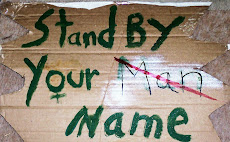
Yesterday, my husband, who’s shopping for a good pre-Passover fare to the States, told me of an Orthodox travel agent (probably not the only one) who won’t sell anyone an itinerary any part of which will compel the passenger to travel on the Sabbath. This of course raised my “parochialism-versus-civil-society” antenna. The following conversation ensued:
Me: How does he know you’re Jewish? The only document you're required to show him is your passport. Your religion isn’t listed on your passport [yet! Stay tuned…].
Him: Well, Plony Almony [acquaintance whose surname is typically Jewish] went to him, and he refused her.
Me: So he’s just assuming she’s Jewish because of her name. He has no actual proof.
So not only is Travel Agent claiming to be able to ascertain his clients’ ethnicity, but of course the real test would be if someone named Muhammed Abu-Salaam walked in and asked for a Shabbes-violating itinerary. If he is sold his ticket, then we have proof that Travel Agent is actually refusing service to certain customers (Jews, according to his own Jewish-o-meter) on the basis of their religion, which I presume to be illegal.
While I don’t have time to test this case, I believe it’s worth bringing to readers’ attention in order to illustrate what a Chelm we’ve created here on the decidedly flimsy basis of something called the “Jewish character of the state”. Not only is this “Jewish character” vague and doesn’t stand up to any Western standards of due process, but it derives from an unsophisticated, Hebrew school-level perception of Israel as a place where Jewish visitors ooh and aah over the taxi driver telling them “Shabbat shalom”…and isn’t it just adorable that the travel agent won’t sell you a ticket for a plane that takes off on Shabbes?!
By now, we as a modern Western country should have advanced past the rapture stage of a summer teen tour participant walking down Ben-Yehuda mall on a first-time-in-Israel Temple Mount High murmuring in stoned wonder, “Far out! Everyone here’s Jewish!” Because to do so is to remain in a state of national arrested development.
It’s time we grew up and faced the challenging, complex, not-as-much-fun-for-the-majority reality that we’re not all Jewish: That fully 25% of us have needs and desires, for instance, the need or desire to travel on the Jewish Sabbath, whether to visit a relative in another town or another country; or to purchase goods on the Jewish Sabbath. And those 25% (plus a large chunk of the other 75%) should not be constrained by the Jewish Sabbath.
It’s time we let go of our fear of losing our “blankie” that we call the state’s “Jewish character”: We’re grownups now; time to put aside our childhood security objects and face life as mature, adult citizens of a democracy.
Thursday, October 14, 2010


Sunday, October 10, 2010
Of loyalty oaths and playgrounds על השבעות נאמנות ומגרשי משחק
Two things about Israel “get to” me. Well OK, more than two, but two specifically that to me symbolize lack of Western values and quality of life: 1) No public transportation on the Sabbath. Try exiting Jerusalem on a Saturday night; it’s like Escape From Alcatraz; 2) The first thing I notice about Arab-populated areas is that the kids always seem to be playing in weedy vacant lots; where are the playgrounds? Lack of playgrounds is the visual hallmark of an underserved population.
Therefore, after reading of the disgraceful proposal that “non-Jewish”* candidates for Israeli citizenship be required to swear an oath of allegiance to a “Jewish, democratic state”, I decided that if ever citizens are ever required to sign a loyalty oath, I will say, “Fine. You want me to swear allegiance? No problem. I will sign this document”, and will take out a red pen and amend the oath to read:
“…Jewish[1] …democratic[2]”
[1]- As per the definition: A country wherein public transportation operates seven days a week, 365 days a year
[2] - A country wherein a minimum of one dunam of European-standard playground area, with safe, functioning equipment, is available to every 50 children under the age of 10, within a kilometer radius of their places of residence.
If as a result, my citizenship is revoked, you'll find me at Ben-Gurion Airport wearing a t-shirt that reads יהודים לא מגרשים יהודים! [“Jews don’t deport Jews!”].
*Whatever that means, since we haven’t managed to decided what a Jew actually is
Therefore, after reading of the disgraceful proposal that “non-Jewish”* candidates for Israeli citizenship be required to swear an oath of allegiance to a “Jewish, democratic state”, I decided that if ever citizens are ever required to sign a loyalty oath, I will say, “Fine. You want me to swear allegiance? No problem. I will sign this document”, and will take out a red pen and amend the oath to read:
“…Jewish[1] …democratic[2]”
[1]- As per the definition: A country wherein public transportation operates seven days a week, 365 days a year
[2] - A country wherein a minimum of one dunam of European-standard playground area, with safe, functioning equipment, is available to every 50 children under the age of 10, within a kilometer radius of their places of residence.
If as a result, my citizenship is revoked, you'll find me at Ben-Gurion Airport wearing a t-shirt that reads יהודים לא מגרשים יהודים! [“Jews don’t deport Jews!”].
*Whatever that means, since we haven’t managed to decided what a Jew actually is
Friday, October 8, 2010
Kids in business establishments ילדים בבתי עסק
Even though the topic of this post is parenting-related, it’s one that everyone’s got an opinion on, so everyone’s welcome to join in the fray. I’m taking issue with the seemingly universal axiom that “kids should be taken out in public; otherwise how will they ever learn how to behave there?”
I postulate that the pendulum has swung too far in the take-‘em-everywhere direction. I actually can't think of a single reason to take a child below the age of about eight to a store or a mall, or any retail establishment, unless they themselves need clothing, and even then, for instance, my mom’s solution was to stop in at a discount store on her way home from work and buy me half a dozen inexpensive dresses or pairs of pants, let me try them on at home and choose, and return the ones I didn’t want the following day. My mom’s method was simply efficient: Why would anyone opt to take hizzer kid to the Land of Temptation and $$$pending when s/he doesn’t absolutely have to?
The only exception I can think of would be single working parents who have no alternative, i.e., no one to watch their child while they do their shopping. Otherwise, why would anyone be under the impression that any effective commerce could be carried out with a child in tow? Besides which, why would anyone deliberately put their child through the predictable exercise of being tempted by all the colors, shiny stuff, and products that they can’t touch, handle, or own? Why?
A fellow commenter on Tell Me About It argues, “The first trips to any place are going to involve a learning curve, no matter what age that first trip is at.” I disagree. I believe that most people over the age of about 14, taken to their first opera, would be able to sit quietly without disrupting the performance, despite never having been to the opera before. Would there have been value in taking them while the “learning curve” was still in process? Similarly, I’d be willing to bet that upon being taken to Target for the first time at the age of eight, an Amish child who’s never seen the inside of a discount emporium, would not run up and down the aisles squealing, grabbing items off the shelves, and demanding to be bought toys and candy.
That’s because Amish (and ultra-Orthodox, etc.) kids of both genders are expected to adhere to “opera behavior standards” when out in public. When our kids hear us say “boys will be boys (i.e., rambunctious)”, our sons get license to behave rambunctiously, and our daughters learn that girls are supposed to be the opposite, i.e., docile. So the boys act up, the ‘rents can’t handle it, and put ‘em in treatment. Why not instead hold our sons to the same behavior expectations as we do our daughters, i.e., cooperative and well-behaved? No doubt because cooperative and well-behaved boys in our society are termed “sissies” instead of “civilized human beings”.
But back to retail establishments -- which we as a society seem to have forgotten are places where business is transacted, and have confused with places of entertainment -- to which I have a problem bringing small children. I’m not suggesting that they be sequestered with their parents under house arrest until they’re “opera-ready”. There are plenty of public places where toddlers belong:
1. The playground (free!) with lots of healthy snacks brought along
2. A public swimming pool or beach (reasonable membership rates)
3. A Discovery Zone if weather is inclement
4. The public libraries, which run wonderful children’s programs, all free
Note that the above are all public, non-sequestered places, yet they are not places where business is transacted (other than paying the entry fee).
You simply must show Junior the latest movie? That’s what DVDs are for. Why are parents of two- and three-year-olds under the delusion that their children can sit through an entire performance, even a children’s play? Eating out? Well, 21st-century parents should consider themselves fortunate that McDonald’s offers a play area; otherwise feed kids at home until they can handle the IHOP or Denny’s, then progress “up the sophistication ladder” from there. There’s no nobility in the parental boast, “Oh we just take her along everywhere!”
I postulate that the pendulum has swung too far in the take-‘em-everywhere direction. I actually can't think of a single reason to take a child below the age of about eight to a store or a mall, or any retail establishment, unless they themselves need clothing, and even then, for instance, my mom’s solution was to stop in at a discount store on her way home from work and buy me half a dozen inexpensive dresses or pairs of pants, let me try them on at home and choose, and return the ones I didn’t want the following day. My mom’s method was simply efficient: Why would anyone opt to take hizzer kid to the Land of Temptation and $$$pending when s/he doesn’t absolutely have to?
The only exception I can think of would be single working parents who have no alternative, i.e., no one to watch their child while they do their shopping. Otherwise, why would anyone be under the impression that any effective commerce could be carried out with a child in tow? Besides which, why would anyone deliberately put their child through the predictable exercise of being tempted by all the colors, shiny stuff, and products that they can’t touch, handle, or own? Why?
A fellow commenter on Tell Me About It argues, “The first trips to any place are going to involve a learning curve, no matter what age that first trip is at.” I disagree. I believe that most people over the age of about 14, taken to their first opera, would be able to sit quietly without disrupting the performance, despite never having been to the opera before. Would there have been value in taking them while the “learning curve” was still in process? Similarly, I’d be willing to bet that upon being taken to Target for the first time at the age of eight, an Amish child who’s never seen the inside of a discount emporium, would not run up and down the aisles squealing, grabbing items off the shelves, and demanding to be bought toys and candy.
That’s because Amish (and ultra-Orthodox, etc.) kids of both genders are expected to adhere to “opera behavior standards” when out in public. When our kids hear us say “boys will be boys (i.e., rambunctious)”, our sons get license to behave rambunctiously, and our daughters learn that girls are supposed to be the opposite, i.e., docile. So the boys act up, the ‘rents can’t handle it, and put ‘em in treatment. Why not instead hold our sons to the same behavior expectations as we do our daughters, i.e., cooperative and well-behaved? No doubt because cooperative and well-behaved boys in our society are termed “sissies” instead of “civilized human beings”.
But back to retail establishments -- which we as a society seem to have forgotten are places where business is transacted, and have confused with places of entertainment -- to which I have a problem bringing small children. I’m not suggesting that they be sequestered with their parents under house arrest until they’re “opera-ready”. There are plenty of public places where toddlers belong:
1. The playground (free!) with lots of healthy snacks brought along
2. A public swimming pool or beach (reasonable membership rates)
3. A Discovery Zone if weather is inclement
4. The public libraries, which run wonderful children’s programs, all free
Note that the above are all public, non-sequestered places, yet they are not places where business is transacted (other than paying the entry fee).
You simply must show Junior the latest movie? That’s what DVDs are for. Why are parents of two- and three-year-olds under the delusion that their children can sit through an entire performance, even a children’s play? Eating out? Well, 21st-century parents should consider themselves fortunate that McDonald’s offers a play area; otherwise feed kids at home until they can handle the IHOP or Denny’s, then progress “up the sophistication ladder” from there. There’s no nobility in the parental boast, “Oh we just take her along everywhere!”
Friday, October 1, 2010
"We didn't start the fire..." הפסיקו לכבות שריפות
Reading this article ע about gender dividers down Mea Shearim’s main street was frustrating for me, yet not for the obvious reasons. I’m more frustrated by the response of the seculars to this latest Khomeinization measure than I am to the actual barriers. Instead of once again “running to Mommy” to tattle and demand that “she” intervene from above in this endless quarrel, why don’t the female activists and elected officials inject some inspiration and humor into the struggle, a la the Supermarket Stripper? Instead of unproductive hand-wringing and putting out fires, why not engage in what’s sorely missing in this country: grassroots activism and civil disobedience? For example, the female activists could have done one or more of the following:
1. Gone to the site in the dead of night and silently removed the fabric from the barrier
2. Strolled up and down the divided street dressed in their usual garb
3. Strolled up and down the street dressed in swimsuits
4. Strolled up and down the street dressed in swimsuits, reciting tehilim [Psalms]
5. Gotten a bunch of male friends to dress as women and stroll up and down the street, reciting Psalms, or not
Get the idea? And if approached by police or residents, say they’re not violating any law. Same goes for the mehadrin [gender-separate] buses. Why not:
1. Board the bus wearing swimsuits?
2. Get a bunch of males dressed in women’s clothing to board and insist on sitting in the back?
3. If approached, respond by quoting a Psalm?
Or as I suggested in a previous post on the “battle for Kiryat Yovel”, instead of fighting the zoning-defying minyan [prayer quorum], go join them: Send a delegation of 50 non-Orthodox men to the home in question, who announce upon entering, “We heard there’s a minyan here. We want to pray.”
Road closed on the Sabbath because the city bowed to Orthodox pressure? No problem: Recruit a dozen swimsuit-wearing folks to stroll up and down it just as folks are going to or coming from shul. Too cold for swimwear? Then wear your usual garb and sing songs from the Bible.
In other words, turn the situation on its head. Challenge assumptions. Demonstrate to the public the absurdity of these situations. Secular activists, are you listening?
Segueing onto the topic of secular values, I’m reading ארבעה בתים וגעגוע by Eshkol Nevó (I believe the English title is Homesick). In it, a man tries to persuade his wife to enroll their son in the (low-low priced, extended-day) Orthodox preschool. He asks her, “What’s wrong with him learning a little Judaism? A few values?” This is an oft-heard question posed by the Orthodox when trying to persuade Jewish parents to enroll their children in Orthodox schools. After all, who would oppose their kids having values? But it got me to thinking: Why are values so inextricably associated with mitzva observance? Why can’t / don’t us non-Orthodox seem to be able to pass on humanist values to our kids?
I believe the answer is that progressive, liberal people, both Jewish and otherwise, tend to be so concerned with tolerance and pluralism that they forget to actually talk to their kids about these values; they figure they’re living them, so their kids will simply…what? Absorb it all by osmosis? It’s time for us liberal parents to take a leaf from the right-wing parents’ books and start talking at home, to our children. We don’t have to preach, and we don’t have to trash anyone; all we have to do is comment on any current news item and ask our kids what they think. Get a conversation started, and don’t be afraid to let your kids hear your opinion.
If you’re ambivalent about an issue, say so: “The occupation is unjust, but I can’t see ending it without a civil war. How would you propose we end it?” There’s nothing wrong with acknowledging that every solution creates new challenges. How else will we raise a generation of problem-solvers? Even kids in the primary grades can learn the lexicon: “occupation”; “settlements”, and “territories” can be explained at their level. These are not dirty words, and there’s no reason to avoid using these terms in everyday conversation; our kids should hear us utter them: After all, in right-wing households, the kids regularly hear about building the Greater Land of Israel and expanding the settlements being God’s mandate. So why are we uncomforable talking to our kids about speaking out against oppression and injustice being committed in our names?
I once overheard an atheist mom twisting herself into a pretzel trying to answer her child’s question: “What’s God? Do we believe in God?” She was trying to walk the tightrope of political correctness with a three-year-old! And we are all That Mom: We’re so fearful of being politically incorrect that we forget to pass on our (humanist) values to our kids.
Guess what? Our kids will not absorb these by osmosis like they (unfortunately) absorb every jingle, commercial, and hit song plugged into their brains via their music players. That stuff is candy; we need to feed them vegetables. We’re not talking force-feeding; just arrange the nutritious stuff attractively on a plate and set it out where they can easily get to it. They’ll bite.
1. Gone to the site in the dead of night and silently removed the fabric from the barrier
2. Strolled up and down the divided street dressed in their usual garb
3. Strolled up and down the street dressed in swimsuits
4. Strolled up and down the street dressed in swimsuits, reciting tehilim [Psalms]
5. Gotten a bunch of male friends to dress as women and stroll up and down the street, reciting Psalms, or not
Get the idea? And if approached by police or residents, say they’re not violating any law. Same goes for the mehadrin [gender-separate] buses. Why not:
1. Board the bus wearing swimsuits?
2. Get a bunch of males dressed in women’s clothing to board and insist on sitting in the back?
3. If approached, respond by quoting a Psalm?
Or as I suggested in a previous post on the “battle for Kiryat Yovel”, instead of fighting the zoning-defying minyan [prayer quorum], go join them: Send a delegation of 50 non-Orthodox men to the home in question, who announce upon entering, “We heard there’s a minyan here. We want to pray.”
Road closed on the Sabbath because the city bowed to Orthodox pressure? No problem: Recruit a dozen swimsuit-wearing folks to stroll up and down it just as folks are going to or coming from shul. Too cold for swimwear? Then wear your usual garb and sing songs from the Bible.
In other words, turn the situation on its head. Challenge assumptions. Demonstrate to the public the absurdity of these situations. Secular activists, are you listening?
Segueing onto the topic of secular values, I’m reading ארבעה בתים וגעגוע by Eshkol Nevó (I believe the English title is Homesick). In it, a man tries to persuade his wife to enroll their son in the (low-low priced, extended-day) Orthodox preschool. He asks her, “What’s wrong with him learning a little Judaism? A few values?” This is an oft-heard question posed by the Orthodox when trying to persuade Jewish parents to enroll their children in Orthodox schools. After all, who would oppose their kids having values? But it got me to thinking: Why are values so inextricably associated with mitzva observance? Why can’t / don’t us non-Orthodox seem to be able to pass on humanist values to our kids?
I believe the answer is that progressive, liberal people, both Jewish and otherwise, tend to be so concerned with tolerance and pluralism that they forget to actually talk to their kids about these values; they figure they’re living them, so their kids will simply…what? Absorb it all by osmosis? It’s time for us liberal parents to take a leaf from the right-wing parents’ books and start talking at home, to our children. We don’t have to preach, and we don’t have to trash anyone; all we have to do is comment on any current news item and ask our kids what they think. Get a conversation started, and don’t be afraid to let your kids hear your opinion.
If you’re ambivalent about an issue, say so: “The occupation is unjust, but I can’t see ending it without a civil war. How would you propose we end it?” There’s nothing wrong with acknowledging that every solution creates new challenges. How else will we raise a generation of problem-solvers? Even kids in the primary grades can learn the lexicon: “occupation”; “settlements”, and “territories” can be explained at their level. These are not dirty words, and there’s no reason to avoid using these terms in everyday conversation; our kids should hear us utter them: After all, in right-wing households, the kids regularly hear about building the Greater Land of Israel and expanding the settlements being God’s mandate. So why are we uncomforable talking to our kids about speaking out against oppression and injustice being committed in our names?
I once overheard an atheist mom twisting herself into a pretzel trying to answer her child’s question: “What’s God? Do we believe in God?” She was trying to walk the tightrope of political correctness with a three-year-old! And we are all That Mom: We’re so fearful of being politically incorrect that we forget to pass on our (humanist) values to our kids.
Guess what? Our kids will not absorb these by osmosis like they (unfortunately) absorb every jingle, commercial, and hit song plugged into their brains via their music players. That stuff is candy; we need to feed them vegetables. We’re not talking force-feeding; just arrange the nutritious stuff attractively on a plate and set it out where they can easily get to it. They’ll bite.
Tuesday, September 14, 2010
Do blue laws dovetail with Jewish observance? האם האיסור על קניות בשבת תואם לשמירת המצוות
Those who know me can attest to the extent of my caring about our planet and my loathing of the consumer culture. And those who know me can attest to my loathing of the mixing of state and religion. That's why I have a problem with the conclusions that Rachel Talshir draws עברית from the fact that our entire country goes into Consumer Paralysis Mode on Yom Kippur.
The explanation that the Orthodox give for their demand that retail establishments close on Sabbath and Yom Tovim is that if the latter were to remain open, other Jews (not themselves, heaven forfend) would then shop and violate the Sabbath. In other words, the problem isn't that they themselves would be thus tempted, but rather that violation of the Sabbath, by any Jews, would occur.
I find this reasoning offensive in its blatant paternalism: Though not Orthodox, I choose not to engage in retail transactions on the Sabbath because I see value therein; it's irrelevant whether others so indulge. Moreover, the demand that there be no retail engaged in on our Sabbath necessarily diminishes the human value of those non-Jews who wish to so engage. In other words, the Orthodox are saying, "Our need to prevent our Sabbath from being violated (as if that were possible in any case) trumps the needs or desires of anyone who isn't of our faith." It's unfortunate that few Orthodox will allow themselves to be exposed to a courageous Christian cleric like the one who said, " Any religion that must depend upon the state to do what it cannot do [i.e., force the citizenry to observe the commandments] is not worthy of existence...even Christianity." The very belief that any legislation reduces Sabbath-violating can fairly be described as madness.
I therefore admit to being positively gleeful when I read of the sweeping profits earned by those stores that did remain open on Rosh haShana [could not find link]. Of course it appears the Orthodox have no trouble looking the other way when such stores are where the goyim shop (referring to Tiv Taam, a chain patronized heavily by non-Jewish consumers); it's only us fellow Jews' abominations they're worried about.
While I'm all for consuming less, including of course less fossil fuel, I absolutely oppose the government piggybacking on religion to make it so. There are plenty of government interventions that I support solidly, such as investing in public transportation, levying tolls on cars entering cities, and mandating recycling (by the way, do the Orthodox lobby for these measures?), but let's not delude ourselves into thinking that blue laws are somehow a good thing for the entire Israeli public.
The explanation that the Orthodox give for their demand that retail establishments close on Sabbath and Yom Tovim is that if the latter were to remain open, other Jews (not themselves, heaven forfend) would then shop and violate the Sabbath. In other words, the problem isn't that they themselves would be thus tempted, but rather that violation of the Sabbath, by any Jews, would occur.
I find this reasoning offensive in its blatant paternalism: Though not Orthodox, I choose not to engage in retail transactions on the Sabbath because I see value therein; it's irrelevant whether others so indulge. Moreover, the demand that there be no retail engaged in on our Sabbath necessarily diminishes the human value of those non-Jews who wish to so engage. In other words, the Orthodox are saying, "Our need to prevent our Sabbath from being violated (as if that were possible in any case) trumps the needs or desires of anyone who isn't of our faith." It's unfortunate that few Orthodox will allow themselves to be exposed to a courageous Christian cleric like the one who said, " Any religion that must depend upon the state to do what it cannot do [i.e., force the citizenry to observe the commandments] is not worthy of existence...even Christianity." The very belief that any legislation reduces Sabbath-violating can fairly be described as madness.
I therefore admit to being positively gleeful when I read of the sweeping profits earned by those stores that did remain open on Rosh haShana [could not find link]. Of course it appears the Orthodox have no trouble looking the other way when such stores are where the goyim shop (referring to Tiv Taam, a chain patronized heavily by non-Jewish consumers); it's only us fellow Jews' abominations they're worried about.
While I'm all for consuming less, including of course less fossil fuel, I absolutely oppose the government piggybacking on religion to make it so. There are plenty of government interventions that I support solidly, such as investing in public transportation, levying tolls on cars entering cities, and mandating recycling (by the way, do the Orthodox lobby for these measures?), but let's not delude ourselves into thinking that blue laws are somehow a good thing for the entire Israeli public.
Tuesday, September 7, 2010
The College of Your Choice אוניברסיטאות אמריקאיות
Inspired by this New Yorker article, coupled with years of listening to 11th and 12th graders and their parents agonize over “getting into a good school”, here’s my advice to the agonizers:
Forget all about which schools have “a great X department”; the only time that will be relevant is if and when you apply to grad school. For earning a bachelor’s degree, your enjoyment without breaking the bank should be your priority. Pick a part of the country that’s always intrigued you, choose a state school(s) therein, and apply. Why?
First of all, until I got to college, I had no idea how common transferring is. This decision that looks So Fateful when you’re opening those acceptance envelopes should be de-mystified. Try this factlet on for size: Half of all graduating seniors did not start out at their schools as freshman.
Secondly, this may be the last time in your life when you get to choose where you’ll live. Soon enough your choices will be constricted by employment, aging parents, special-needs siblings or children, or those of a partner. Why blow this jewel of an opportunity so you can later say you attended Fancy Name College?
Finally, I wouldn’t do this post justice if I didn’t air-raid against the Great Brainwash of the Private College. It’s a shame how many families pursue the myth called “a good college”, the main claim of which is that public higher education is inferior. Why would any sane person dig herself deep in debt in exchange for a piece of paper that is only marginally more valuable — if at all — than an equivalent piece of paper purchased at a fraction of the cost?
A four-year degree is just the beginning of a life journey that in most cases consists of three or more career moves; it is therefore in actuality merely a ticket to either a job that doesn’t require a hairnet, or grad school. What one does in either of these post-B.A. worlds determines much more strongly one’s path and one’s success therein than does what university you attended. Two anecdotes illustrate:
An acquaintance who attended community college and then continued at an Ivy League school tells of her community college instructors and how skilled they were at enthusing their students about the material. She was therefore shocked on her first day at Penn, when the professor stood on the podium staring at his shoes, then looked up and greeted the full auditorium with, “I don’t like teaching. It interferes with my research.” In complete seriousness.
VoteForTheLeastWorst, a reviewer on Amazon: “My brilliant community college communications professor told us a wonderful story on our first day. She was at Harvard for a conference, and decided to check out the bookstore and their communications textbook selection. What did she find? That my good ol' publicly funded community college uses the exact same book Harvard uses, for the exact same communication class. I paid $39 a credit hour for my education; Harvard students pay $800 a credit hour for theirs. Who's dumber?”
Steph16, a Hax commenter, on Big Name College: "Competitive Parents, I work on Wall Street. Honestly, after your first job, NO ONE cares where you went to school, What they care about is how you've distinguished yourself in your career. There are people here from U. of Florida to Harvard. What matters more are your grades in undergrad for your first job, and then working your way up.
More on this subject here.
Forget all about which schools have “a great X department”; the only time that will be relevant is if and when you apply to grad school. For earning a bachelor’s degree, your enjoyment without breaking the bank should be your priority. Pick a part of the country that’s always intrigued you, choose a state school(s) therein, and apply. Why?
First of all, until I got to college, I had no idea how common transferring is. This decision that looks So Fateful when you’re opening those acceptance envelopes should be de-mystified. Try this factlet on for size: Half of all graduating seniors did not start out at their schools as freshman.
Secondly, this may be the last time in your life when you get to choose where you’ll live. Soon enough your choices will be constricted by employment, aging parents, special-needs siblings or children, or those of a partner. Why blow this jewel of an opportunity so you can later say you attended Fancy Name College?
Finally, I wouldn’t do this post justice if I didn’t air-raid against the Great Brainwash of the Private College. It’s a shame how many families pursue the myth called “a good college”, the main claim of which is that public higher education is inferior. Why would any sane person dig herself deep in debt in exchange for a piece of paper that is only marginally more valuable — if at all — than an equivalent piece of paper purchased at a fraction of the cost?
A four-year degree is just the beginning of a life journey that in most cases consists of three or more career moves; it is therefore in actuality merely a ticket to either a job that doesn’t require a hairnet, or grad school. What one does in either of these post-B.A. worlds determines much more strongly one’s path and one’s success therein than does what university you attended. Two anecdotes illustrate:
An acquaintance who attended community college and then continued at an Ivy League school tells of her community college instructors and how skilled they were at enthusing their students about the material. She was therefore shocked on her first day at Penn, when the professor stood on the podium staring at his shoes, then looked up and greeted the full auditorium with, “I don’t like teaching. It interferes with my research.” In complete seriousness.
VoteForTheLeastWorst, a reviewer on Amazon: “My brilliant community college communications professor told us a wonderful story on our first day. She was at Harvard for a conference, and decided to check out the bookstore and their communications textbook selection. What did she find? That my good ol' publicly funded community college uses the exact same book Harvard uses, for the exact same communication class. I paid $39 a credit hour for my education; Harvard students pay $800 a credit hour for theirs. Who's dumber?”
Steph16, a Hax commenter, on Big Name College: "Competitive Parents, I work on Wall Street. Honestly, after your first job, NO ONE cares where you went to school, What they care about is how you've distinguished yourself in your career. There are people here from U. of Florida to Harvard. What matters more are your grades in undergrad for your first job, and then working your way up.
I'm
sure you've heard about the millions of CEOs who were C students. Quality of
grad school matters to a degree more but then it's back to performance. So
really, just let your kids enjoy themselves, pursue their interests, and it will
all work out. Happy, satisfied people have it so much better.
More on this subject here.
Wednesday, September 1, 2010
Ariel: It's the occupation, stupid אריאל: זהו הכיבוש, טיפשון
May I add my two zuzim to the Ariel theater “boycott” fray?
First of all, let’s get our terms straight. Or rather, let Limor Livnat et al. get their terms straight:
1. What a boycott is: an economic tool used to pressure a seller into ceasing a certain practice perceived by consumers to be unlawful, unfair, or inhumane
2. What a boycott is not: a social taboo, i.e., sleeping with one’s mother
When Livnat decries a “boycott from within”, I say: You can decry all you want, but from within or without, it’s legitimate to boycott an institution. For instance, I choose to boycott products made by Nestle, which now owns chunks of both Telma and Osem. So yes, in a miniscule way, I’m harming my own (Israel’s) economy. Does this mean it’s not my right to boycott it? After all, it’s “a boycott from within”.
3. What the theater personnel are actually doing: striking. That’s right: They’ve declared that they will not work under certain conditions. Prime Minister Netanyahu claims that their threatened actions are illegitimate because their employers — the theaters — are state-subsidized. Interesting. Last time I checked, teachers, firefighters, nurses, EMTs, and airport personnel are also state employees, and we’ve all certainly suffered the effects of their strikes. Therefore logic dictates that if there is a work dispute, it should be referred to the Labor Ministry, not the Patriotism Police, much as Livnat no doubt wishes there were such a thing.
Now let’s turn our attention to one of the popular arguments against the actors’ strike, that claiming that “Successive (read: Labor) governments supported the settlement enterprise, so it is unacceptable to turn our backs on it now”.
First of all, this is a transparent smear at the left, i.e., “Your once-powerful party started this thing, and now you have the chutzpa to oppose it.” This argument is disingenuous at the least, as we all know that many of us, despite having perhaps voted for Labor, opposed the settlements even as Labor established them, as we hoped to influence those whom we saw as our representatives to stop doing so.
Moreover, is the fact that one’s government made mistakes a reason to throw good money after bad? Many governments have backed or actively engaged in spilling effluent into and over-fishing our oceans, over-timbering the Pacific Northwest, and decimating our rainforests. Does that mean we should just continue engaging in these unsustainable practices? Because that’s what the settlement enterprise is: One can argue whether it’s right or wrong, good or evil. But whichever it is, it’s indisputably unsustainable, which in itself is a reason to do a U-turn and not continue down the Greater Land of Israel Collision Course.
Now let’s look at a term that’s being excavated from the media antiquities and bandied about: Ariel was enticingly advertised as being “five minutes’ drive from Kfar Saba”, the subtext of which is: “You get the scenery of Samaria with the convenience of a nearby city, which includes shopping, services, and entertainment, a five-minute drive for which is a low price”. So, the settlers paid their money and made their choice: They chose Samarian scenery over living inside the Green Line; therefore let them drive five minutes to see theater. The majority of Israelis live further than a five-minute drive from a theater, so what makes living in Ariel such a particular hardship?
The actors’ strike was inevitable; it’s a natural response to a policy that they oppose, and it won’t be the last. For their part, the Palis are perfectly situated to ensure that the building freeze never thaws: All they have to do is not show up for work on September 27th, i.e., a strike. What could be simpler? If all who oppose the settlements were to donate to a strike fund for those Palis who earn their livelihoods doing construction work in the settlements, we'd have enough to at least stop work for a while, during which we should demonstrate, but not in Rabin Square. Instead, we should form a human chain stretching from the Defense Ministry Compound to the remotest hilltop settlements, carrying banners proclaiming, "העם אינו עם השומרון"; "Settlers, you're outside the consensus"; and "Israelis Against the Settlements"; and make sure CNN is there with cameras rolling (to quote my talkback to Bradley Burston's heart-stopping piece on the settlements).
First of all, let’s get our terms straight. Or rather, let Limor Livnat et al. get their terms straight:
1. What a boycott is: an economic tool used to pressure a seller into ceasing a certain practice perceived by consumers to be unlawful, unfair, or inhumane
2. What a boycott is not: a social taboo, i.e., sleeping with one’s mother
When Livnat decries a “boycott from within”, I say: You can decry all you want, but from within or without, it’s legitimate to boycott an institution. For instance, I choose to boycott products made by Nestle, which now owns chunks of both Telma and Osem. So yes, in a miniscule way, I’m harming my own (Israel’s) economy. Does this mean it’s not my right to boycott it? After all, it’s “a boycott from within”.
3. What the theater personnel are actually doing: striking. That’s right: They’ve declared that they will not work under certain conditions. Prime Minister Netanyahu claims that their threatened actions are illegitimate because their employers — the theaters — are state-subsidized. Interesting. Last time I checked, teachers, firefighters, nurses, EMTs, and airport personnel are also state employees, and we’ve all certainly suffered the effects of their strikes. Therefore logic dictates that if there is a work dispute, it should be referred to the Labor Ministry, not the Patriotism Police, much as Livnat no doubt wishes there were such a thing.
Now let’s turn our attention to one of the popular arguments against the actors’ strike, that claiming that “Successive (read: Labor) governments supported the settlement enterprise, so it is unacceptable to turn our backs on it now”.
First of all, this is a transparent smear at the left, i.e., “Your once-powerful party started this thing, and now you have the chutzpa to oppose it.” This argument is disingenuous at the least, as we all know that many of us, despite having perhaps voted for Labor, opposed the settlements even as Labor established them, as we hoped to influence those whom we saw as our representatives to stop doing so.
Moreover, is the fact that one’s government made mistakes a reason to throw good money after bad? Many governments have backed or actively engaged in spilling effluent into and over-fishing our oceans, over-timbering the Pacific Northwest, and decimating our rainforests. Does that mean we should just continue engaging in these unsustainable practices? Because that’s what the settlement enterprise is: One can argue whether it’s right or wrong, good or evil. But whichever it is, it’s indisputably unsustainable, which in itself is a reason to do a U-turn and not continue down the Greater Land of Israel Collision Course.
Now let’s look at a term that’s being excavated from the media antiquities and bandied about: Ariel was enticingly advertised as being “five minutes’ drive from Kfar Saba”, the subtext of which is: “You get the scenery of Samaria with the convenience of a nearby city, which includes shopping, services, and entertainment, a five-minute drive for which is a low price”. So, the settlers paid their money and made their choice: They chose Samarian scenery over living inside the Green Line; therefore let them drive five minutes to see theater. The majority of Israelis live further than a five-minute drive from a theater, so what makes living in Ariel such a particular hardship?
The actors’ strike was inevitable; it’s a natural response to a policy that they oppose, and it won’t be the last. For their part, the Palis are perfectly situated to ensure that the building freeze never thaws: All they have to do is not show up for work on September 27th, i.e., a strike. What could be simpler? If all who oppose the settlements were to donate to a strike fund for those Palis who earn their livelihoods doing construction work in the settlements, we'd have enough to at least stop work for a while, during which we should demonstrate, but not in Rabin Square. Instead, we should form a human chain stretching from the Defense Ministry Compound to the remotest hilltop settlements, carrying banners proclaiming, "העם אינו עם השומרון"; "Settlers, you're outside the consensus"; and "Israelis Against the Settlements"; and make sure CNN is there with cameras rolling (to quote my talkback to Bradley Burston's heart-stopping piece on the settlements).
Subscribe to:
Posts (Atom)