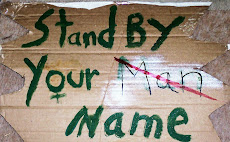
Well, folks, I warned you here when it was “only” Arabs who want to live in all-Jewish communities that civil rights are just around the bend! Now an “undesirable Jew” wants in, and the High Court has given the ILA 60 days to explain why vetting committees for communities occupying state land should be permissible.
The Hebrew Talkbacks (90 responses) are roughly 50-50 in favor / against (I submitted two “pro” responses, nos. 89 and 90). The opposing responses seemed to be mostly in the category of, “Why shouldn’t a community get to decide who joins?”, clearly deriving from a century-old mindset of overwhelmingly communal-style settlement that’s even reflected in the Hebrew language, which takes special care to specify an entity known as ישוב קהילתי yishuv kehilatì, or “community settlement”*, as Hebrew-speakers have a hard time conceiving of a planned community being an ordinary bedroom community wherein nothing officially ties the residents together other than their common ZIP code.
It’s also reflected in the designation ישוב בודד yishuv bodèd [individually-owned settlement] labeling what everywhere else on the planet is known as a [family] farm or homestead, which we foreign-born wouldn’t bother specifying that it belongs to a single, nuclear family or individual(s).
In this particular case, the psychological assessment of the applicant (now the plaintiff in the case) described him as perceiving the move to the community in question as a refuge from his challenges. And that’s undesirable because…?
In regard to my own case, that of a kibbutz member, I understand that in its legal status as an income-sharing community, a kibbutz is exempt from the High Court ruling. As I wrote in one of my talkbacks to the article, I’m waiting for someone to challenge this state of affairs as well. We too occupy state-owned land; therefore, does the fact that we’re income sharing have any bearing on whether we have the right to restrict a citizen from living here (which is not the same, by the way, as accepting hizzer as a member).
My thoughts are wandering now: Are whites allowed to reside on Indian reservations? What constitutes an Indian / a white? Hmmm…
*I would normally translate ישוב yishuv as “community”, but couldn’t go as far as to translate ישוב קהילתי yishuv kehilatì as “community community”; and it’s not a communal community, because there’s no income-sharing element as there is in a moshav or kibbutz.
Showing posts with label Community Vetting Committees מתנגדת לועדות קליטה. Show all posts
Showing posts with label Community Vetting Committees מתנגדת לועדות קליטה. Show all posts
Thursday, January 29, 2009


Subscribe to:
Posts (Atom)