Monday, June 28, 2010

Mystery Photo תצלום תעלומה


Taking a break from our regular programming to post the photo on the left, which I found in May while cleaning out my mom's purses, which she no longer uses. Neither she nor my dad had any idea who these people are, nor how the photo made its way to my mom's purse.
While the likelihood is that they're Kansas Citians, just for the record, my mom volunteered at the (now defunct) Hadassah Bargain Center, where she might have taken a liking to and purchased the handbag in which the photo was found; so it's anyone's guess. I welcome all info, and will be pleased to send the original photo to its owner(s).

Monday, June 21, 2010

None of us are deportation-proof אף אחד מאיתנו אינו חסין כנגד גירוש

Reading about the cases of Drs. Imad Hammada and Murad Abu-Khalaf עברית — both of whom have had their East Jerusalem residency revoked while residing abroad — got me to thinking: None of us should get too smug about our right to live here. As long as our Interior Ministry is headed by ayatollahs, who run it in their typical capricious, draconian manner, it can turn on any one of us any day. Take my own case, for instance:

When I came on aliya, I don’t recall having to submit any proof that I’m Jewish. The shlicha asked for neither my mother’s ketuba nor a brisket receipt from my great-grandmother’s kosher butcher in Grodno. Ditto for the state rabbi who officiated at our wedding. However, according to what I hear and read about most other immigrants, my experience is exceptional.


Supposing in the same way that some rabbi decided to investigate further and revoke hundreds of conversions, a rabbi who didn’t have anything better to do that day decided to look into my Jewish pedigree. While no one would blink before attesting to the fact that I’m Jewish, I actually have no way of proving it. And neither do any of us. Ten years into the 21st century, we Jews have got to come to grips with the new reality; we’ve got to let go of the fantasy called “the unity of the Jewish people”. Not only is it impossible to prove that someone’s Jewish, it’s impossible to prove that someone isn’t. Not only do we need to admit this, but we need to come to grips with the implications thereof:
· Israel has become a desirable destination for the have-nots of the world, whether they hail from the former USSR, Africa, or elsewhere.
· Because thousands are knocking at our door, the Law of Return must be revoked and replaced with an immigration policy, as strict or as lax as we wish.
· The above entails (to paraphrase Carlo Strenger עברית) the state severing its ties to all religious institutions, and becoming completely secular, along the French or U.S. model. Both Jews and Muslims would have to accept that the state cannot play any role in affairs of religion, and religious institutions would become completely voluntary and communitarian.

These three are not only intertwined, they’re inevitable; the only alternative is a theocracy. The fact that any Jew has the power to certify the kashrut of any other Jew -- unless granted such power by the Jew in question (i.e., you’re a willing follower of a particular rabbi) -- should be setting off alarms for us all. I call on every Jew reading this to “take back the brit”: Don’t submit your pedigree for inspection; don’t hand over authority to any entity to whose views you don’t subscribe. Don’t sign over your “power of Jewish attorney”.

Thursday, June 17, 2010

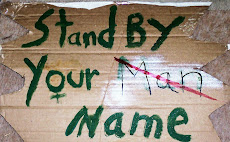
"Choice Feminism": I'll Opt Out "פמיניזם הבחירה"...אני בוחרת "לא"

I’ve noticed that whenever a woman defends having taken her husband’s name, or defends dressing provocatively, it’s invariably stated, “After all, feminism is about choice.” Well I’m not pleased with having women who choose tradition, or patriarchy, telling me what feminism “is about”.

Take the word “choice”. Somehow, when a woman explains her decision to take her husband’s name as a choice, it feels like she’s using the term in the sense of “I choose vanilla; you choose chocolate”, i.e., there's no implication, no greater statement being made; it's simply a matter of what you like and what I like. But the difference between choosing ice cream flavors and choosing which name to use is that the former has no values attached, while which name one uses very much reflects one’s values.

In this sense, I can’t really go with “feminism is about choice”. To me it’s akin to an African-American saying, “The civil rights movement was about choice, and I choose to sit at the back of the bus.” Unlikely, I’d say. So why is feminism any different? Feminism is about choice in the sense that it’s about women having choices other than the traditional ones; we don't need feminism in order to opt for tradition -- traditional roles have been "freely available" for the past 10,000 years.

Therefore I see feminism as being about parity (notice I didn’t say “equality”, God forbid), i.e., being on a par with men; and when I take someone else’s name, I’m by definition not on a par with him. Ditto when I intentionally dress (or dress my daughter) so as to objectify myself in men’s eyes. How can I be on a par with someone who views me as an object?

Moreover, it doesn’t strike me that someone who chooses to take her husband’s name is sincerely concerned about her “choices” being jeopardized. In a world where at least half of all women retained their birth names, such a woman might indeed feel pressured to do so, but we’re not even close to that world. On the other hand, stay-at-home moms do feel pressured to work for an income, but I doubt that that pressure is coming from feminist circles; more likely it’s economic pressure coming from within their own households.

In actuality, it’s democracy that’s about choice. In a democracy, we’re free to choose traditional lifestyles a la Amish or ultra-Orthodox, as long as we don’t impose them on the rest of the citizenry. Yet it seems disingenuous for women making traditional choices to invoke feminism in the defense of those choices, especially when it’s only when it serves them that they even bother to acknowledge feminism.

And, what exactly are they acknowledging when they say, “feminism is about…”? It appears to refer to a rather fuzzy code for “Some 1970s struggle that ended the Dark Ages”. How many of you who parrot “feminism is about choices” have actually read feminist literature, taken a gender studies class, or attended a consciousness-raising session?

I rather conceive of feminism as precisely being about questioning assumptions, pushing the boundaries, even rocking the boat, and yes, doing the uncomfortable thing. Taking your husband’s name does none of these; an eight-year-old wearing a top emblazoned with “So Many Boys, So Little Time” is making a statement…unfortunately a twisted one.

I will rejoice when we get to a place where retaining our names is the comfortable thing; when Western society finally strikes that sartorial balance between repression and promiscuity. Until then, please don’t drag feminism in when defending your having chosen to settle into comfortable, traditional roles.

Added February 13, 2011- quote from Haxer Beck2:

"Traditional ladies didn't have to pay for anything, but they didn't get to have sex until they were married, and the only decisions they ever got to make in their lives were whether to say Yes or No to an offer of marriage, and what they were going to wear.

Modern ladies get to do whatever they want (as long as it's considerate of others), AND they pay for that privilege by taking full responsibility for their own material support and well-being.

A woman can pick either system and still be a lady -- but she can't enjoy the rights from one system and ditch its associated responsibilities."

Wednesday, April 28, 2010

Party of Five שולחן לחמישה

When Gilmore Girls was dropped from the local channel, it left a hole in my day. So I checked out the series that replaced it in its time slot, Party of Five (I know, I know: I’m 15 years behind the times. Just humor me).

First let’s get something out of the way: Yes, Pof5 engages me; you could even say I’m hooked, because I want to know what happens next, and I even — I admit it — analyze it when I’m not watching, i.e., “Charlie should’ve moved them to Seattle”; “Why does Bailey have to go to college 2,000 miles away?” “Julia was so out of line talking about Justin to his mom”.

So while there’s no question that I enjoy the program, there’s a disturbing undercurrent running through it: Do viewers get that the way the characters operate in their relationships is a model of how not to do relationships? I’m not referring only to the incessant cheating; I can deal with that. It’s that every couple seems to have two modes: Deliriously in love, or quarreling, the latter always seeming to stem from an innocent remark from which offense was taken, along the lines of:

Character A: You need to act responsibly here…

Character B: Responsibly? Excuse me! What do you know about responsibility?!

Character A: Look, all I’m saying is that maybe it wouldn’t be the end of the world if you’d…

Character B: Oh! Like you’re so perfect! I suppose you expect me to…!

It’s disturbing to think that young viewers may think that the above is a normal relationship pattern. Not to mention that the emphasis in Charlie and Kirsten’s almost-wedding seemed to be on one thing: forsaking all others. Not joining their lives, compromising, working as a team, putting each other’s happiness first…but forsaking all others, as if marriage is nothing but a relationship version of traffic law, i.e., just don’t exceed the speed limit, and you’ll be fine.

All in all, simplistic, served up as realistic. I know: It’s “just” TV; we can’t expect it to reflect real life. Yet we can’t ignore that it does feed into viewers’ — especially young viewers’ — concepts of what to expect from real life. I’d like to think that my kids will dig deeper and shoot higher than do the Salingers.

Tuesday, April 13, 2010

Netiquette, please נימוסים אלקטרוניים, בבקשה

E-mail having been around since 1996, and most literate folks having gotten on the bandwagon by 2000, a decade should be sufficient time for us all to’ve gotten used to it, and for the novelty to’ve worn off. Why, then, am I still getting mail with “Fwd Fwd Fwd Fwd Fwd…” in the Subject line? Why are people still sending me mass mailings in 24 boldface font, three words to a line, and with a lifetime supply of exclamation points?!!!!!!!!!!!!!!! Why is the message preceded and followed by a meter-long list of recipients’ addresses? And why am I instructed to “Hit forward and send this to everyone you know”? If you’re under eight or over 80 years of age, you get a pass from me. The rest of you, please heed:

1. A To or cc field with inches of addresses says, “Not serious; not businesslike”. When you send these out, you’re failing to protect your friends’ and others’ privacy. Learn to bcc.

2. Subject lines containing “Fwd” are spam magnets. Delete “Fwd” both in the Subject line and in the body of the mail.

3. Learn to compose a decent Subject line. Examples of the lame and the annoying: “Important! Please forward!”; “Hi”; “ " (that’s an empty Subject line; the first two examples might as well be empty, as they give no useful information whatsoever).

4. Trim off all excess “froms”. We don’t need to read them, and it’s annoying to have to scroll all the way down to Antarctica to read a mail.

5. Read through what you’re about to send. Ask yourself what impression it gives. Oversize lettering and multiple colors screams, “Written by a fourth grader!” Consider selecting the entire letter (Ctrl + A), going to your Format menu, selecting Rich Text, and adjusting the font(s) and color(s) (Format menu > Font). If you’re really ambitious and have the time, fix the double spaces and dial back those exclamation points. Correct spelling wouldn’t hurt either. And finally…

6. I don’t need to be told to forward mail any more than I need to be told to tell people my opinion on an issue or my impression of a product; it’s implicit. And can we lose the expression “Hit Forward” and “Hit Reply”? First of all, none of us should be hitting anything. We press keys on our keyboards, i.e., “Press Enter”; “Press Escape”. We click buttons using our mouses, i.e., “Click OK”; “Click this link”. And we simply forward mail…after performing all of the above steps.

Sunday, April 11, 2010

A Cleric Speaks Out For Separation of Church & State כומר בעד הפרדת דת ומדינה

I finally tracked it down after 17 years, with the help of Dwight Tawney and Caroloyn Nussbeck of the Village Presbyterian Church in Prairie Village, Kansas: A sermon delivered by their Pastor Emeritus the Rev. Doc. Robert H. Meneilly, and reprinted in the New York Times in 1993. It was probably reprinted in whatever English language paper I read at the time, and I never forgot it. I'm posting a link to it here (you don't even need to download the doc; just click on the above link and read), but for those who don't feel like slogging through the entire four pages, I'm reprinting what I feel to be the salient quotes:
  • Any religion that needs the government to support and subsidize it doesn't deserve to survive. It's not the state's business to carry out the churches' ministries!
  • Any religion that must depend upon the state to do what it cannot do [i.e., force the citizenry to observe the commandments] is not worthy of existence...even Christianity.
  • When the state and the church would become entwined, it is the latter that will be the loser.
  • We can't uphold the...commandments by majority rule!

As far as I'm concerned, that says it all as far as church and state. Would that more clerics and religious leaders were as courageous as Rev. Meneilly, who a friend calls "an icon in the 'burbs"*.

*Johnson County, KS, where his church is located. Think Ultimate Suburbia, and you're there.

Thursday, March 25, 2010

Why Popeye Has to Defend OliveOyl ?מדוע חייב פופיי להגן על אוליב אויל

A friend sent me Yet Another Article citing a “study” finding that male and female brains differ, and therefore 'proves' that the genders are destined to behave according to long-held stereotypes. Since you have to sign up as a member to comment (I hate that. What’s that all about?), and I don’t want to become a “member” of Yet Another Forum, I’ll sound off here, where I’m a member of my own club and anyone with a computer is welcome and encouraged to comment.

Dr. Louann Brizendine is here to tell us among other things that “his amygdala, the alarm system for threats, fear, and danger is...larger in men…making men more alert than women to potential turf threats.”

Why, then, are women the stereotyped worriers, and the ones who are stereotyped as getting up on a chair and shrieking if we see a mouse or a spider?

Dr. Brizendine goes on to explain how male’s brains are the reason they constantly check out women and stare at their breasts, and why, when we tell them our problems, they go into Fixit Mode. She concludes by proverbially throwing up her hands and sighing that it makes more sense to deal with these brain realities, than to argue with them or ignore them…”The best advice I have for women is make peace with the male brain. Let men be men.”

Ah, yes. Let men be men: It’s just one molecule away from “boys will be boys”. It’s all wired in. It’s in their DNA. Not a darned thing we can do. Why even try to civilize them?

Dr. Brizendine's credentials notwithstanding, this is simplistic pop drek parading as science and excusing gender stereotyping.