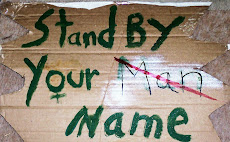
In case it's escaped your notice, social protest here is deplorably unsophisticated. Three examples:
A female Jewish cashier dates a male Palestinian bagger, and all hell breaks loose. The local rabbi, who would be the sheriff if this were a western, pays a visit to the store CEO demanding that the latter do something, and poor Rami Levi twists himself into a pretzel trying to please everyone. In the process he sets himself up as a social worker, relationship chaperone, and babysitter, and forgets what he presumably does for a living: He runs a business. In a real Western country, where clerics don't intimidate the ordinary citizen, Levi would tell Rabbi Perl privately, "I run a business, and my employee policies are implemented with that one goal in mind. I regret that I'm not the address for your problems."
And in a real Western country, Levi's statement to the press would be: "We at Rami Levi do not purport to intervene in the individual relationships between our employees. As long as their relations do not interfere with their performing their duties, it's not our business. With all due respect, I direct Rabbi Perl to address his congregants on this issue, not us. Meanwhile, as always, we invite all our neighbors to continue to shop with us, and in return we pledge to continue to provide quality groceries at reasonable prices to all our customers."
Thank the Lord for Yossi Sarid. Unfortunately, we in Israel suffer from a disease called We're Not Political-itis, which manifests itself in social protesters resolutely insisting that their cause isn't, God forbid, political. Yet Sarid reminds us that curiously, there are no tent protests in the territories. Hello, Israel: How could anything be more political? When will Israelis stop being intimidated by the right? How long, Lord, before we demand what is due us?
That aside, I have a problem with the whole "I refuse to live anywhere but Tel Aviv" mindset. What's wrong with a 45-minute train commute to and from Ashdod, or a 10-minute commute to Lod? Who wants to live in Lod, you ask? Well, if a critical mass of tent-dwellers does, they'll benefit, and so will Lod. That's how organic communities form: Greenwich Village was originally populated by struggling artists. Ditto for similar urban districts all over the West, which morphed into bastions of -- you guessed it -- openness and tolerance. But if all the open, tolerant folks insist on living nowhere but Tel Aviv, what direction do they expect housing prices to go?
What a shame Ir Amim's Orit Noy didn't "tell it like it is" regarding artists performing in Silwan. She states her protest is "personal, not political" (there we go again: "Not political"). Why is Noy afraid to take a stand on behalf of Ir Amim, who's been valiantly fighting Elad for decades? Again: What could be more political?
And what's "active cooperation with a 'radical political move'" supposed to mean? Don't hide, Noy. Just state your case clearly: "We oppose patronizing Elad-sponsored events held in Silwan, as Elad has been harassing Silwan residents and making their lives miserable for decades." Case closed. What's so hard about that?
What in God's name are people afraid of? It must be the same fear that causes Israelis to incessantly use כ, or *keh* — a prefix that translates as "approximately" — anytime numbers are involved, i.e., *ani gara k'arba'im kilometer mi'Eilat* ["I live approximately 40 kilometers from Eilat"]; *k'esrim achuz miHaOchlusiya aravi* ["Approximately 20% of the population is Arab"].
From what lawsuit are people trying to cover their behinds? Are they afraid that if they don't use כ, someday they'll be subpoenaed and be required to prove that the distance from their house to Eilat is precisely 40 km? That precisely 1.5 million Israelis are Arab? It's Loony Toons. But then so is a CEO of a supermarket chain placating a local rabbi.
Tuesday, July 26, 2011


Tuesday, July 19, 2011
Boycotting and Goldstoning חרם וגולדסטון
The talkbackers to Karni Eldad's defense of the Boycott Law say it better than I could, although I did edit:
JJ Burke wrote:
"If the settlers had any confidence in their arguments, they wouldn't need to mangle the law to silence their opponents."
David wrote:
"1. You did not go to Judah & Samaria to be human shields, but based on Messianic belief, so don't feed us that bull. Maybe the Arabs like martyr stories, but we don't. 2. You enjoy inexpensive housing and municipal services paid for by our taxes. 3. You have an entire army wasting resources on protecting you. I'd be surprised if your taxes cover that. 4. You cause millions to be spent on roads and utilities to support your settlements. I'd be surprised if your taxes cover that. 5. The decision to settle territories was not made democratically, even if it was eventually adopted by the governments, so let's not pretend the right is huge fans of democracy. 6. Thank you for not deploying supermarket inspectors to examine whether I buy Arabs' olive oil and not settlers' olive oil. The fact that you even bring this up as some sort of “capitulation” on your part should make everyone of sound mind shudder at the implications of the crazy thoughts you and your buddies consider acceptable, moral, and cultured discourse. You have become ridiculous. Wake up.
Nahman Umani wrote:
"She’s kidding, right? If this is for real, it shows us how much the settler movement is living in a parallel universe and that there is no real way of reconciliation. She is presenting us with the prospect of a zero-sum game. Tragic."
And I ask: If the settlers believe their cause (and livelihood) is just, why don't they just publish their own list of Judaean and Samaritan products, a la the Christian Yellow Pages? Why force the consumer to rely on (and decipher) BDS information, some of which is admittedly questionable? Nu, Yesha? I challenge you to pick up the marketing gauntlet. Let the consumer public decide who's right and who's wrong.
Know what galls me about the settlers? The pathetic Kiryat Shmona library, the only public library for miles, was closed for lack of funds; the Sderot Cinemateque, the only one in the entire Negev, is in danger of closing for lack of funds; and meanwhile, in the settlements, the beat goes on: paved access roads, lush, watered lawns, a theater in Ariel (because the five-minute drive to Kfar Saba is too far), museums (?!) -- plenty of money for those. But for the weak population who's really on the front lines -- being pounded by Katyushas and Kassams -- the well runs dry.
What I don't understand is all the secular Israelis who defend the settlers. I want to ask them: Don't you understand that they don't give a rat's _ss about you? They're totally in it for themselves. Karni Eldad cries crocodile tears about her "worthy sons" who defend "our" cafes and pubs. How about my sons (OK, nephews, but you get the idea) who have to serve in Hebron to defend her red-roofed house in Tekoa? How fair is that?
And now we turn to the proposed bill to audit human rights groups that "fed" info to Goldstone. Journalists Barak Ravid and Jonathan Lis, as well as Haaretz, have got my knickers in a twist almost as much as the Boycott Law. They’ve done it yet again in this headline: “Lieberman blasts PM, Likud ministers for refusing to probe left-wing groups”.
Why, oh why, do the reporters play directly into the right’s hands by referring to human rights groups as “left-wing”? Not only is this practice journalistically unacceptable, as “left-wing” is a subjective term that can’t provably be applied to non-profits; but in applying it to rights groups, it perpetuates the twisted notion that human rights is the exclusive purview of the left, which is the whole problem. I appeal to all journalists: Please, please refer to organizations by what they do, not some knee-jerk label.
The article headed MK Zuabi red-carded for role in 2010 flotilla tells us: ""The Ethics Committee said that Zuabi...dealt a blow to the Knesset's dignity and the public's trust therein."
No, I'm afraid that "achievement" goes to the Knesset itself, for passing deplorable laws instead of governing the country. Way to go, “Ethics” Committee.
JJ Burke wrote:
"If the settlers had any confidence in their arguments, they wouldn't need to mangle the law to silence their opponents."
David wrote:
"1. You did not go to Judah & Samaria to be human shields, but based on Messianic belief, so don't feed us that bull. Maybe the Arabs like martyr stories, but we don't. 2. You enjoy inexpensive housing and municipal services paid for by our taxes. 3. You have an entire army wasting resources on protecting you. I'd be surprised if your taxes cover that. 4. You cause millions to be spent on roads and utilities to support your settlements. I'd be surprised if your taxes cover that. 5. The decision to settle territories was not made democratically, even if it was eventually adopted by the governments, so let's not pretend the right is huge fans of democracy. 6. Thank you for not deploying supermarket inspectors to examine whether I buy Arabs' olive oil and not settlers' olive oil. The fact that you even bring this up as some sort of “capitulation” on your part should make everyone of sound mind shudder at the implications of the crazy thoughts you and your buddies consider acceptable, moral, and cultured discourse. You have become ridiculous. Wake up.
Nahman Umani wrote:
"She’s kidding, right? If this is for real, it shows us how much the settler movement is living in a parallel universe and that there is no real way of reconciliation. She is presenting us with the prospect of a zero-sum game. Tragic."
And I ask: If the settlers believe their cause (and livelihood) is just, why don't they just publish their own list of Judaean and Samaritan products, a la the Christian Yellow Pages? Why force the consumer to rely on (and decipher) BDS information, some of which is admittedly questionable? Nu, Yesha? I challenge you to pick up the marketing gauntlet. Let the consumer public decide who's right and who's wrong.
Know what galls me about the settlers? The pathetic Kiryat Shmona library, the only public library for miles, was closed for lack of funds; the Sderot Cinemateque, the only one in the entire Negev, is in danger of closing for lack of funds; and meanwhile, in the settlements, the beat goes on: paved access roads, lush, watered lawns, a theater in Ariel (because the five-minute drive to Kfar Saba is too far), museums (?!) -- plenty of money for those. But for the weak population who's really on the front lines -- being pounded by Katyushas and Kassams -- the well runs dry.
What I don't understand is all the secular Israelis who defend the settlers. I want to ask them: Don't you understand that they don't give a rat's _ss about you? They're totally in it for themselves. Karni Eldad cries crocodile tears about her "worthy sons" who defend "our" cafes and pubs. How about my sons (OK, nephews, but you get the idea) who have to serve in Hebron to defend her red-roofed house in Tekoa? How fair is that?
And now we turn to the proposed bill to audit human rights groups that "fed" info to Goldstone. Journalists Barak Ravid and Jonathan Lis, as well as Haaretz, have got my knickers in a twist almost as much as the Boycott Law. They’ve done it yet again in this headline: “Lieberman blasts PM, Likud ministers for refusing to probe left-wing groups”.
Why, oh why, do the reporters play directly into the right’s hands by referring to human rights groups as “left-wing”? Not only is this practice journalistically unacceptable, as “left-wing” is a subjective term that can’t provably be applied to non-profits; but in applying it to rights groups, it perpetuates the twisted notion that human rights is the exclusive purview of the left, which is the whole problem. I appeal to all journalists: Please, please refer to organizations by what they do, not some knee-jerk label.
The article headed MK Zuabi red-carded for role in 2010 flotilla tells us: ""The Ethics Committee said that Zuabi...dealt a blow to the Knesset's dignity and the public's trust therein."
No, I'm afraid that "achievement" goes to the Knesset itself, for passing deplorable laws instead of governing the country. Way to go, “Ethics” Committee.
Thursday, June 30, 2011
Pink: Not just another color ורוד: לא סתם עוד גוון
Even if you subscribe to the belief that girls and boys inherently differ — as argued by a friend who describes her son’s first encounter with a tractor tire at age three: “He stood there staring at it in awe…my daughter would never have exhibited such behavior” — it’s hard to argue that the deluge of Everything Pink, Princess, and Sparkly (after which they graduate to Sexy, Slutty, and Bratty) is doing our girls any good.
First, let’s take a look at the color (actually shade) pink. To those who shrug and ask, “What’s the big deal? It’s just a color,” I ask in kind: What’s the big deal about a swastika? It’s just an ornamental symbol that was in use for centuries before there were ever such creatures as Nazis. See what I mean? Nothing that ubiquitous, that pervasive, is ever “just a…” We can’t turn the clock back to when pink was just a color any more than we can go back in time to when a swastika was just a decoration.
Speaking of going back in time, let’s take a look at the quintessential female-stereotyped toy: the Susie Homemaker Oven As much as I disapprove of its message that cooking and baking are women’s jobs, note that 1) It’s — get ready! — green, and 2) It actually does something, i.e., it’s a tool used to produce, create, make something — not to mention promote learning a life skill — as opposed to the overwhelming quantity of products aimed at today’s girls, which encourage them to 1) dress up, 2) look good, and 3) get pampered.
Even classic toys like Lego, which encourage building and creating, now have a special “Girls” category, and parents unfortunately seem to swallow whole the Legos premise that kids’ interests break down by gender. Instead of asking, “Why aren’t there more ‘girls’ Legos’?” how come parents aren’t simply buying the “boys’ Legos” for their girls? Did I miss the Gender Police at Toys r Us?
Lastly, let’s turn our attention to this century’s corporate juggernaut, the Disney princesses. Look closer: They’re no longer innocent. In fact, they’ve gotten a sexy 21st-century makeover Also, note the facial expressions: In the last two examples, Belle and Sleeping Beauty have coy, come-hither expressions that they didn’t have when they were “born”. In other words, Disney princesses who began their “careers” as girls have "inexplicably" morphed into young women, i.e., they have sexual potential. Whether or not it’s not subtle, it's insidious, and like any subliminal message, deserves our attention.
So, what do we do? Well, for one thing, we can make a Present Pact: Next time you’re choosing a present for a kid, choose a gender-neutral one, or if those are too hard to find, at least don’t drench the recipient, if she’s a girl, in yet more pink; and if a boy, in yet more macho, superhero black. For newborns I recommend skipping a gift for Baby entirely and instead pampering the parents with a nice body products or coffee sampler gift pack. After all, being pampered is a privilege, not a right, right?
First, let’s take a look at the color (actually shade) pink. To those who shrug and ask, “What’s the big deal? It’s just a color,” I ask in kind: What’s the big deal about a swastika? It’s just an ornamental symbol that was in use for centuries before there were ever such creatures as Nazis. See what I mean? Nothing that ubiquitous, that pervasive, is ever “just a…” We can’t turn the clock back to when pink was just a color any more than we can go back in time to when a swastika was just a decoration.
Speaking of going back in time, let’s take a look at the quintessential female-stereotyped toy: the Susie Homemaker Oven As much as I disapprove of its message that cooking and baking are women’s jobs, note that 1) It’s — get ready! — green, and 2) It actually does something, i.e., it’s a tool used to produce, create, make something — not to mention promote learning a life skill — as opposed to the overwhelming quantity of products aimed at today’s girls, which encourage them to 1) dress up, 2) look good, and 3) get pampered.
Even classic toys like Lego, which encourage building and creating, now have a special “Girls” category, and parents unfortunately seem to swallow whole the Legos premise that kids’ interests break down by gender. Instead of asking, “Why aren’t there more ‘girls’ Legos’?” how come parents aren’t simply buying the “boys’ Legos” for their girls? Did I miss the Gender Police at Toys r Us?
Lastly, let’s turn our attention to this century’s corporate juggernaut, the Disney princesses. Look closer: They’re no longer innocent. In fact, they’ve gotten a sexy 21st-century makeover Also, note the facial expressions: In the last two examples, Belle and Sleeping Beauty have coy, come-hither expressions that they didn’t have when they were “born”. In other words, Disney princesses who began their “careers” as girls have "inexplicably" morphed into young women, i.e., they have sexual potential. Whether or not it’s not subtle, it's insidious, and like any subliminal message, deserves our attention.
So, what do we do? Well, for one thing, we can make a Present Pact: Next time you’re choosing a present for a kid, choose a gender-neutral one, or if those are too hard to find, at least don’t drench the recipient, if she’s a girl, in yet more pink; and if a boy, in yet more macho, superhero black. For newborns I recommend skipping a gift for Baby entirely and instead pampering the parents with a nice body products or coffee sampler gift pack. After all, being pampered is a privilege, not a right, right?
Sunday, May 29, 2011
Taking bets: Is Storm a boy, or a girl? האם סטורם בת, או בן
Regarding the Canadian couple who have chosen not to reveal the sex of their third child, I’m reprinting here some of the comments thereon, with my occasional responses interspersed in red. As you’ll see, the first few commenters don’t take the notion seriously at all, remarking snarkily about how much therapy the kid’ll surely need. Below the comments, I’ll offer my thoughts:
2. kris
I hope in Canada there's plenty of funding for therapy.
3. lk
These people are just setting their kids (all of them) up for years of therapy.
12. Tara Lindis
I am currently pregnant with our second child, and …as we prepare therefor, we have been searching for gender-neutral clothing and ending up frustrated by the lack of variety - or that anything remotely gender neutral is [to be found] in the “boys’” department. I believe it is indicative of the increasing disparity of gender identities.
As someone currently looking for baby clothes and as someone who did not have her first pink dress until she was six, I find the lack of primary colors in children's clothing disturbing: Everything is either pink, or camouflage.
A friend of mine from Finland tells me of a trend there wherein parents, when asked if their child is a boy or a girl, respond, "It's a person." I find this fascinating. Surely, there is some balance to be achieved between the Canadian couple and the nauseatingly limiting array of baby clothes on sale at Babies R Us? Isn't army fatigues for newborn boys and bikinis and high heels for three-year-old girls just as twisted as raising a child without any gender at all?
15. Kara
So... if I am not supposed to, or can't, use "he" or "she" to refer to this child..... do I use "it"? That is the only other pronoun available.
Uh, no, it’s not. I’ve seen: co / co’s; hizzer; hir; s/he; and others I can’t recall. Why not expand the options, instead of limiting them and ourselves?
19. Anne
It is not as if the child can be kept in the dark about its own gender much past the age of three, if that long. I doubt that a gender-neutral upbringing until then — exposing the kid to both dolls and cars — would have long-term traumatic impact. If gender identification is ingrained, then the child will eventually identify with its gender anyway. If gender identification is not ingrained — well, then they have proven their point that …societal norms rather than biology …determine who we are — and the kid will be fine.
21. jzzy55
What is the advantage of being gender-free?
I suppose the same advantage as not having to wear a yellow Star of David patch bearing the word “Jude”: It’s no one’s damn business and should be irrelevant, with the exception perhaps of the individual’s medical providers.
22. miami lawyer mama
We can only know so much about newborns, and one of the few concrete things we can know at birth IS what's between their legs (along with their weights and lengths). That's why those three things are the most asked [about]. Because seriously, what are we supposed to do? Sit down with newborns and have a conversation to "get to know" them?
Well, I suggest we can each actively make an effort to not ask the gender, or if the gender is known, not dwelling on it, and especially not making dorky and / or sexualizing comments such as [said in an artificially high voice to a girl] “Oh, such a sweetheart! She’s gonna knock ‘em dead!” / [said in an artificially low voice to a boy] “Hey, Big Guy. You’re a little man, aren’t you? Go knock ‘em dead, Bucko!”
Other suggested topics: the birth (without probing too much); nursing (without getting too intimate); how sibs are reacting, if any; the name; the weather; how ‘bout them [name sports team]? See? It’s actually easier than we think to not dwell on gender.
25. kateNonymous
While when I was a child, pink was “for girls”, today it seems as if pink is the only color “for girls”. There is relentlessness to the shade that it lacked in my own youth. Similarly, there were no babies wearing clothing printed with things like "Diva". That is not what we want to teach our daughter, or the message we want to send to the world.
I never have a problem with people who ask if she's a boy or a girl, or who refer to her in the masculine. She's a baby, and it's hard to tell at this age. But on more than one occasion I've had someone say in an accusing tone, "It's hard to tell when you dress her in blue."
My response to the next person [who says that] will be, "Really? I'm wearing blue. Can you tell I'm a girl?"
33. Hadfield:
I tried a very mild version of this. People would say "what a handsome boy!" and I'd just say, "Thank you" instead of telling them that my daughter is a girl (and vice versa with my son). But at a certain point, before they were 16 months old, my children would look at me with surprise, and some dismay, as if I weren't sticking up for them. They seemed to want the correction to be made.
While it might be crazy to ignore sex distinctions, it's equally crazy--and much more widespread--to highlight them constantly: Not all clothing, toys, haircuts, and types of play should be determined by gender. Yet marketers and parents seem to be rigid on these points--sickeningly so. I'd rather be treated as gender neutral than forced to paint my nails and wear high heels and tight shirts — and for some reason, elementary school girls are doing these things these days!
37. jh
Has it occurred to anyone that the kid could be intersex? This is actually a relatively common occurrence. If this is the case, the parents are perhaps taking a risk in being so public about rejecting binary gender for the kid, i.e., a lot of scrutiny of the family and the kid might not be so desirable either. On the other hand, what else is better? And who's to say?
I'm not saying this is definitely the case; obviously we simply don't know. Yet [it’s] worth considering before jumping all over the family’s choices. Indeed, worth considering as we think about gender, period.
43. Maggie
The tone of the commenters before me makes it completely clear to me how valuable this family’s action is. And how much I would like to see parents in general raising "children" rather than choosing to raise "a girl" this time and "a boy" next time. There is …damage in being told -- by teachers and neighbors, not just parents -- that what you are doing is 'too girly' for a boy or 'too mannish' for a girl.
Perhaps if all parents were raising gender-neutral children, as Storm's parents are, the world would be a bit safer for the kids who really aren't "boys" or "girls".
47. Tiara
While a more gender-neutral approach to raising children than our current standard would be good, a completely gender-neutral approach is impossible and unwise. That said, it's amazing how fixated we are on gender. It's the first thing asked about a baby: Boy, or girl? It shouldn't be the first thing we care about, and it shouldn't be artificially ignored.
55. sRose 1210
We're not genderless, and … these "progressive" parents aren’t doing their anon-tot any favors. If that doesn't scar them or ill prepare them for adulthood, their names surely will.
Let me guess, sRose: Your kids are named…let’s see now; what’re the trending names this year? Max and Emily? Oh no, wait: That’s so Last Decade. Or did you decide to just “blend” with Susan and Michael?
62. rh
I don't believe that a boy walks earlier and a girl has better language skills. That was made up long ago and now we’ve become to believe it. And that is how we are conditioned, and we project this on to our kids. It's time to wake up to new consciousness, and I congratulate all parents that give that freedom to their kids.
...And now back to our original programming: Commenter no. 4, slKim, basically sums it up for me:
"I can think of lots of ways to challenge gender norms [other] than this kind of veiling."
While I genuinely respect Storm’s parents and wish more would challenge gender norms and stereotypes, they may be killing their experiment with all the media attention. I’m imagining the pointing and whispering whenever they’re outside their home, and it’s just got to be hard on Storm’s siblings, if not the parents. It seems to me that they could’ve gotten the same point across by buying a dozen white onesies and having them printed with: “I’m not just a girl; I’m a person.” Or how about: “I’m not a girly-girl. I’m a kid.” For a boy: "I'm a person first, then I'm a boy." CafePress, I’ll be the first in line to buy one!
2. kris
I hope in Canada there's plenty of funding for therapy.
3. lk
These people are just setting their kids (all of them) up for years of therapy.
12. Tara Lindis
I am currently pregnant with our second child, and …as we prepare therefor, we have been searching for gender-neutral clothing and ending up frustrated by the lack of variety - or that anything remotely gender neutral is [to be found] in the “boys’” department. I believe it is indicative of the increasing disparity of gender identities.
As someone currently looking for baby clothes and as someone who did not have her first pink dress until she was six, I find the lack of primary colors in children's clothing disturbing: Everything is either pink, or camouflage.
A friend of mine from Finland tells me of a trend there wherein parents, when asked if their child is a boy or a girl, respond, "It's a person." I find this fascinating. Surely, there is some balance to be achieved between the Canadian couple and the nauseatingly limiting array of baby clothes on sale at Babies R Us? Isn't army fatigues for newborn boys and bikinis and high heels for three-year-old girls just as twisted as raising a child without any gender at all?
15. Kara
So... if I am not supposed to, or can't, use "he" or "she" to refer to this child..... do I use "it"? That is the only other pronoun available.
Uh, no, it’s not. I’ve seen: co / co’s; hizzer; hir; s/he; and others I can’t recall. Why not expand the options, instead of limiting them and ourselves?
19. Anne
It is not as if the child can be kept in the dark about its own gender much past the age of three, if that long. I doubt that a gender-neutral upbringing until then — exposing the kid to both dolls and cars — would have long-term traumatic impact. If gender identification is ingrained, then the child will eventually identify with its gender anyway. If gender identification is not ingrained — well, then they have proven their point that …societal norms rather than biology …determine who we are — and the kid will be fine.
21. jzzy55
What is the advantage of being gender-free?
I suppose the same advantage as not having to wear a yellow Star of David patch bearing the word “Jude”: It’s no one’s damn business and should be irrelevant, with the exception perhaps of the individual’s medical providers.
22. miami lawyer mama
We can only know so much about newborns, and one of the few concrete things we can know at birth IS what's between their legs (along with their weights and lengths). That's why those three things are the most asked [about]. Because seriously, what are we supposed to do? Sit down with newborns and have a conversation to "get to know" them?
Well, I suggest we can each actively make an effort to not ask the gender, or if the gender is known, not dwelling on it, and especially not making dorky and / or sexualizing comments such as [said in an artificially high voice to a girl] “Oh, such a sweetheart! She’s gonna knock ‘em dead!” / [said in an artificially low voice to a boy] “Hey, Big Guy. You’re a little man, aren’t you? Go knock ‘em dead, Bucko!”
Other suggested topics: the birth (without probing too much); nursing (without getting too intimate); how sibs are reacting, if any; the name; the weather; how ‘bout them [name sports team]? See? It’s actually easier than we think to not dwell on gender.
25. kateNonymous
While when I was a child, pink was “for girls”, today it seems as if pink is the only color “for girls”. There is relentlessness to the shade that it lacked in my own youth. Similarly, there were no babies wearing clothing printed with things like "Diva". That is not what we want to teach our daughter, or the message we want to send to the world.
I never have a problem with people who ask if she's a boy or a girl, or who refer to her in the masculine. She's a baby, and it's hard to tell at this age. But on more than one occasion I've had someone say in an accusing tone, "It's hard to tell when you dress her in blue."
My response to the next person [who says that] will be, "Really? I'm wearing blue. Can you tell I'm a girl?"
33. Hadfield:
I tried a very mild version of this. People would say "what a handsome boy!" and I'd just say, "Thank you" instead of telling them that my daughter is a girl (and vice versa with my son). But at a certain point, before they were 16 months old, my children would look at me with surprise, and some dismay, as if I weren't sticking up for them. They seemed to want the correction to be made.
While it might be crazy to ignore sex distinctions, it's equally crazy--and much more widespread--to highlight them constantly: Not all clothing, toys, haircuts, and types of play should be determined by gender. Yet marketers and parents seem to be rigid on these points--sickeningly so. I'd rather be treated as gender neutral than forced to paint my nails and wear high heels and tight shirts — and for some reason, elementary school girls are doing these things these days!
37. jh
Has it occurred to anyone that the kid could be intersex? This is actually a relatively common occurrence. If this is the case, the parents are perhaps taking a risk in being so public about rejecting binary gender for the kid, i.e., a lot of scrutiny of the family and the kid might not be so desirable either. On the other hand, what else is better? And who's to say?
I'm not saying this is definitely the case; obviously we simply don't know. Yet [it’s] worth considering before jumping all over the family’s choices. Indeed, worth considering as we think about gender, period.
43. Maggie
The tone of the commenters before me makes it completely clear to me how valuable this family’s action is. And how much I would like to see parents in general raising "children" rather than choosing to raise "a girl" this time and "a boy" next time. There is …damage in being told -- by teachers and neighbors, not just parents -- that what you are doing is 'too girly' for a boy or 'too mannish' for a girl.
Perhaps if all parents were raising gender-neutral children, as Storm's parents are, the world would be a bit safer for the kids who really aren't "boys" or "girls".
47. Tiara
While a more gender-neutral approach to raising children than our current standard would be good, a completely gender-neutral approach is impossible and unwise. That said, it's amazing how fixated we are on gender. It's the first thing asked about a baby: Boy, or girl? It shouldn't be the first thing we care about, and it shouldn't be artificially ignored.
55. sRose 1210
We're not genderless, and … these "progressive" parents aren’t doing their anon-tot any favors. If that doesn't scar them or ill prepare them for adulthood, their names surely will.
Let me guess, sRose: Your kids are named…let’s see now; what’re the trending names this year? Max and Emily? Oh no, wait: That’s so Last Decade. Or did you decide to just “blend” with Susan and Michael?
62. rh
I don't believe that a boy walks earlier and a girl has better language skills. That was made up long ago and now we’ve become to believe it. And that is how we are conditioned, and we project this on to our kids. It's time to wake up to new consciousness, and I congratulate all parents that give that freedom to their kids.
...And now back to our original programming: Commenter no. 4, slKim, basically sums it up for me:
"I can think of lots of ways to challenge gender norms [other] than this kind of veiling."
While I genuinely respect Storm’s parents and wish more would challenge gender norms and stereotypes, they may be killing their experiment with all the media attention. I’m imagining the pointing and whispering whenever they’re outside their home, and it’s just got to be hard on Storm’s siblings, if not the parents. It seems to me that they could’ve gotten the same point across by buying a dozen white onesies and having them printed with: “I’m not just a girl; I’m a person.” Or how about: “I’m not a girly-girl. I’m a kid.” For a boy: "I'm a person first, then I'm a boy." CafePress, I’ll be the first in line to buy one!
Wednesday, May 25, 2011
Women, don't give UP your surnames; give them PRIMACY נשים, תנו שמותכן זכות קדימה
Please welcome guest blogger Mark Tyler, who recently took his wife's surname:
Yam,
The following explains why I believe the woman's last name should be given primacy rather than given up. In the ongoing discourse about last names, marriage, and children, nearly all of the focus is on the choices that women face upon marriage, i.e., whether to keep their birth names, take their husbands’ surnames, hyphenate, use one name at home and another at work, etc. I propose a totally new approach: On marriage, the woman keeps her surname, the man formally takes his wife's surname, and the children of the couple are given that surname. Further, if an unmarried couple has a child, it is given the mother's surname, while the father retains his surname.
This solution is superior to our (Western) traditional one. One advantage thereof is that with both divorce and single parenthood so prevalent, yet with divorced mothers still obtaining custody nearly 100% of the time, having kids bear their mother’s name simply makes sense. For example, under our current system, Miss Salt marries Mr. Pepper, becomes Mrs. Pepper, and their children are named Pepper. If, as happens about 50% of the time, the Peppers divorce, Mrs. Pepper will likely retain custody of the Pepper children. If she later marries Mr. Marjoram, she becomes Mrs. Marjoram, as will any offspring of that new marriage, resulting in Peppers and Marjorams living at the same address; whereas under my proposal, when Miss Salt first marries, the couple is Mr. and Mrs. Salt, and their children are Salts. After their divorce and Mrs. Salt’s remarriage, the new family – the couple and the kids from both marriages – remain Salts. Far less confusion, I’d say. And radical, too, I admit — yet it makes more sense than the present system.
It becomes even more logical when applied to out-of-wedlock children. Today, it's not uncommon for a single mom to be living with 2 or 3 kids under her roof, each of whom bear a last name other than hers (and each others'). My proposal eliminates that confusion, if not the attendant social dysfunction.
As long as we're being “radical”, let's go a step further and put men and women on equal footing when it comes to identifying their personal statuses, which should be irrelevant to everyone except the IRS and Social Security. Under our current system, men retain their privacy, i.e., they are all "Mr.", whereas women are still marked as "Miss" and “Mrs." despite the fact that "Ms." has uncomfortably coexisted with them for more than 30 years. I therefore propose using “Ms.” for all women and “Mr.” for men - totally equal.
So, to go back to our example with this refinement, Ms. Salt marries Mr. Pepper, he becomes Mr. Salt, she remains Ms. Salt, and their children are named Salt. If, as happens about 50% of the time, the Salts divorce, Ms. Salt will likely retain custody of the Salt children. If she later marries Mr. Marjoram, he becomes Mr. Salt, as will the offspring of that new marriage. So everyone living at that address will be a Salt. While the system is female-centric, it makes profound sense given our societal structure, and it is as even as can be made possible: All men and all women are treated equally when it comes to title. The only difference is that men change names upon marriage, and deal with that issue should there be a divorce.
Should a divorce occur, the man has the option of reclaiming his original surname. Some will, so our first Mr. Salt will revert to being Mr. Pepper; some won't, probably wishing to retain a naming connection to their kids, so our first Mr. Salt will remain Mr. Salt. Either way, from a naming standpoint, the man's decision is irrelevant. Take our Mr. Salt / Mr. Pepper: If he meets Ms. Nutmeg and marries her, he becomes Mr. Nutmeg and their children will be Nutmegs. If they have a child outside marriage, s/he will also be a Nutmeg. Since each child derives her last name solely from her mother, regardless of marriage, the man's naming decision does not matter.
To make one further point, men of course have the option of using their birth surnames in business or whatever other aspect they wish; just their official surname changes upon marriage.If society were to go in this direction, I'm confident we’d all adjust, and women would even have a good laugh or two: Wedding announcements stating, “the groom will retain his name professionally”; men bitching and moaning about all the paperwork involved in a name change. High school reunions will never be the same: The guys will wear the nametags that read “Bill (Clinton) Rodham” and “Tim (Robbins) Sarandon.” And not a few women would look at their daughters proudly and reflect that they will “carry on the family name”.
Mark Tyler
Mark, I congratulate you. Just one note regarding “Ms.” It’s been suggested that “Ms.” largely failed because someone(s) tried to reinvent the wheel, i.e., if instead those women had simply declared that all women, whether married or not, are now “permitted” to use “Mrs.”, “Miss” would’ve dropped off the horizon, along with all the ambivalence associated with “Ms.” So I’ll take this opportunity to re-propose it: Let’s all us women adopt “Mrs.”.
But hold on: Why not take titles to their logical conclusion? In keeping with my claim that gender is a social construct, why not both genders just adopt “Mr.”? If you think about it, in all cases outside of formal business correspondence, any title is superfluous. Why does my magazine address label even need one? As long as they get my name (and address) correct, who cares what my gender is? In cases where gender matters, such as research, the researcher can certainly ask the respondent to indicate it. Otherwise, I can’t think of a single instance wherein an individual seeking to correspond with me needs to know whether I’m a man or a woman. Anyone ready to jump?
Yam,
The following explains why I believe the woman's last name should be given primacy rather than given up. In the ongoing discourse about last names, marriage, and children, nearly all of the focus is on the choices that women face upon marriage, i.e., whether to keep their birth names, take their husbands’ surnames, hyphenate, use one name at home and another at work, etc. I propose a totally new approach: On marriage, the woman keeps her surname, the man formally takes his wife's surname, and the children of the couple are given that surname. Further, if an unmarried couple has a child, it is given the mother's surname, while the father retains his surname.
This solution is superior to our (Western) traditional one. One advantage thereof is that with both divorce and single parenthood so prevalent, yet with divorced mothers still obtaining custody nearly 100% of the time, having kids bear their mother’s name simply makes sense. For example, under our current system, Miss Salt marries Mr. Pepper, becomes Mrs. Pepper, and their children are named Pepper. If, as happens about 50% of the time, the Peppers divorce, Mrs. Pepper will likely retain custody of the Pepper children. If she later marries Mr. Marjoram, she becomes Mrs. Marjoram, as will any offspring of that new marriage, resulting in Peppers and Marjorams living at the same address; whereas under my proposal, when Miss Salt first marries, the couple is Mr. and Mrs. Salt, and their children are Salts. After their divorce and Mrs. Salt’s remarriage, the new family – the couple and the kids from both marriages – remain Salts. Far less confusion, I’d say. And radical, too, I admit — yet it makes more sense than the present system.
It becomes even more logical when applied to out-of-wedlock children. Today, it's not uncommon for a single mom to be living with 2 or 3 kids under her roof, each of whom bear a last name other than hers (and each others'). My proposal eliminates that confusion, if not the attendant social dysfunction.
As long as we're being “radical”, let's go a step further and put men and women on equal footing when it comes to identifying their personal statuses, which should be irrelevant to everyone except the IRS and Social Security. Under our current system, men retain their privacy, i.e., they are all "Mr.", whereas women are still marked as "Miss" and “Mrs." despite the fact that "Ms." has uncomfortably coexisted with them for more than 30 years. I therefore propose using “Ms.” for all women and “Mr.” for men - totally equal.
So, to go back to our example with this refinement, Ms. Salt marries Mr. Pepper, he becomes Mr. Salt, she remains Ms. Salt, and their children are named Salt. If, as happens about 50% of the time, the Salts divorce, Ms. Salt will likely retain custody of the Salt children. If she later marries Mr. Marjoram, he becomes Mr. Salt, as will the offspring of that new marriage. So everyone living at that address will be a Salt. While the system is female-centric, it makes profound sense given our societal structure, and it is as even as can be made possible: All men and all women are treated equally when it comes to title. The only difference is that men change names upon marriage, and deal with that issue should there be a divorce.
Should a divorce occur, the man has the option of reclaiming his original surname. Some will, so our first Mr. Salt will revert to being Mr. Pepper; some won't, probably wishing to retain a naming connection to their kids, so our first Mr. Salt will remain Mr. Salt. Either way, from a naming standpoint, the man's decision is irrelevant. Take our Mr. Salt / Mr. Pepper: If he meets Ms. Nutmeg and marries her, he becomes Mr. Nutmeg and their children will be Nutmegs. If they have a child outside marriage, s/he will also be a Nutmeg. Since each child derives her last name solely from her mother, regardless of marriage, the man's naming decision does not matter.
To make one further point, men of course have the option of using their birth surnames in business or whatever other aspect they wish; just their official surname changes upon marriage.If society were to go in this direction, I'm confident we’d all adjust, and women would even have a good laugh or two: Wedding announcements stating, “the groom will retain his name professionally”; men bitching and moaning about all the paperwork involved in a name change. High school reunions will never be the same: The guys will wear the nametags that read “Bill (Clinton) Rodham” and “Tim (Robbins) Sarandon.” And not a few women would look at their daughters proudly and reflect that they will “carry on the family name”.
Mark Tyler
Mark, I congratulate you. Just one note regarding “Ms.” It’s been suggested that “Ms.” largely failed because someone(s) tried to reinvent the wheel, i.e., if instead those women had simply declared that all women, whether married or not, are now “permitted” to use “Mrs.”, “Miss” would’ve dropped off the horizon, along with all the ambivalence associated with “Ms.” So I’ll take this opportunity to re-propose it: Let’s all us women adopt “Mrs.”.
But hold on: Why not take titles to their logical conclusion? In keeping with my claim that gender is a social construct, why not both genders just adopt “Mr.”? If you think about it, in all cases outside of formal business correspondence, any title is superfluous. Why does my magazine address label even need one? As long as they get my name (and address) correct, who cares what my gender is? In cases where gender matters, such as research, the researcher can certainly ask the respondent to indicate it. Otherwise, I can’t think of a single instance wherein an individual seeking to correspond with me needs to know whether I’m a man or a woman. Anyone ready to jump?
Friday, May 20, 2011
Proposed circumcision ban האיסור על ברית מילה על הפרק
At the behest of my cousin, who blogs here and wondered why I’ve been silent on the proposed circumcision ban, I concede that she’s right; while I don’t have a strong opinion thereon (perhaps because I don't have sons?), after having done my research, which consisted of reading this article and the first page of comments (which seems to cover all the bases), I’ll weigh in. First, though, I’d like to quote two of my favorite comments, the first actually being more appropriate to a discussion of another controversial procedure, but I’ve blogged on that procedure already, so I paraphrase it here:
NotKidding
"It's the anti-abortion people who should oppose circumcision. After all, either they care about those helpless little babies AFTER they are born too...or they are just a bunch of windbags using fake concern for zygotes to try and control women's sexual behavior, and care nothing for the actual infants / children / adults once they are no longer useful as 'punishment' for sex."
Well said, NotKidding!
Jane174596
"At what point does a collection of cells become a baby? Have your own opinion on that? Based upon…? See what I mean? Everyone has their own definitions... You are clearly entitled to oppose abortion... however you are not entitled to restrict my rights based thereon.... It is the woman's choice.... If she believes as you do, then she won't have one…no one is forced to have an abortion; one can only be forced not to.
Back to the topic at hand... how much government interference in our lives are we going to allow?... This might be a pertinent topic IF circumcision were required by law, but it is not. Therefore, once again: It is the individual’s choice, and it should remain so."
Me
What I am getting from the comments is that a small group claims to be extremely concerned about innocent infants’ genitals. Why is that? Who gets this hyped up about this issue?
I don’t buy the HIV prevention, sexual sensation, or aesthetic arguments, either pro or con. In a case like Africa’s, you do whatever it takes to prevent the spread of AIDS and save lives. As for sexual pleasure, it’s a toss-up: Some claim more, some claim less, both intact and circumcised. Aesthetics are certainly a matter of taste. Nor do I believe that banning circumcision makes a society more evolved, just as banning abortion certainly does not make a society more evolved.
I also reject, “It’s child abuse, and where does it end?” I don’t know. Where does it end? So far, it seems to end at the shouts of mazel tov! Circumcison doesn’t fit the parameters of child abuse as the social work and child protection community recognizes it, i.e., circumcisees are not an at-risk juvenile population and are not a risk to society due to their being more likely to grow up to be violent / abusers.
My proposal: Circumcision should be legal provided: 1) a topical anaesthetic is used; 2) health insurance doesn’t cover it. It is, after all, elective. There. Everybody happy?
NotKidding
"It's the anti-abortion people who should oppose circumcision. After all, either they care about those helpless little babies AFTER they are born too...or they are just a bunch of windbags using fake concern for zygotes to try and control women's sexual behavior, and care nothing for the actual infants / children / adults once they are no longer useful as 'punishment' for sex."
Well said, NotKidding!
Jane174596
"At what point does a collection of cells become a baby? Have your own opinion on that? Based upon…? See what I mean? Everyone has their own definitions... You are clearly entitled to oppose abortion... however you are not entitled to restrict my rights based thereon.... It is the woman's choice.... If she believes as you do, then she won't have one…no one is forced to have an abortion; one can only be forced not to.
Back to the topic at hand... how much government interference in our lives are we going to allow?... This might be a pertinent topic IF circumcision were required by law, but it is not. Therefore, once again: It is the individual’s choice, and it should remain so."
Me
What I am getting from the comments is that a small group claims to be extremely concerned about innocent infants’ genitals. Why is that? Who gets this hyped up about this issue?
I don’t buy the HIV prevention, sexual sensation, or aesthetic arguments, either pro or con. In a case like Africa’s, you do whatever it takes to prevent the spread of AIDS and save lives. As for sexual pleasure, it’s a toss-up: Some claim more, some claim less, both intact and circumcised. Aesthetics are certainly a matter of taste. Nor do I believe that banning circumcision makes a society more evolved, just as banning abortion certainly does not make a society more evolved.
I also reject, “It’s child abuse, and where does it end?” I don’t know. Where does it end? So far, it seems to end at the shouts of mazel tov! Circumcison doesn’t fit the parameters of child abuse as the social work and child protection community recognizes it, i.e., circumcisees are not an at-risk juvenile population and are not a risk to society due to their being more likely to grow up to be violent / abusers.
My proposal: Circumcision should be legal provided: 1) a topical anaesthetic is used; 2) health insurance doesn’t cover it. It is, after all, elective. There. Everybody happy?
Thursday, May 19, 2011
We have to save our bellies for our husbands? עלינו לשמור את בטנינו לבעלינו
I’m going to open this piece with the caveat that it’s going to contain a non-PC descriptive phrase, namely “dressing like a slut”. Or alternatively, as this articulate Amazon reviewer put it, "the slut uniform". So if you’re squeamish about what that phrase invokes in your imagination, read no further.*
I justify using this phrase by way of reminding readers that language and words serve us as code; non-PC though it be, “dressing like a slut / tart / hooker” describes an adequately consensual phenomenon, thereby eliminating the need for illustrations complete with arrows and labels and bulleted lists, i.e., when we hear “dresses like a slut”, we each know what we mean.
Now enter Secret Keeper Girl, which I came across in my cyber travels, a concept for Christian girls and their moms that advocates dressing modestly. So far, in light of our over-sexualized, under-parented young population, I’m down with that. The site even features a Truth or Bare Fashion Test designed to help girls dress in the latest styles, yet modestly. The first tip talks about showing too much belly. It explains, “Bellies are intoxicating, and we need to save that for our husbands!”
Well...not exactly. Here’s where my philosophy diverges from theirs: I presume that we don’t want to show too much belly so we don’t look like sluts, i.e., so we’ll be taken seriously, and not just related to as sex objects. This is usually the point where a young woman presuming to be a third-wave feminist chirps, “But I choose to dress this way [revealingly]. It’s my choice to flaunt my body.”
At this juncture, I’d ask said young woman: Are you willing to own that choice? Are you informed about the risks entailed in sex? Do you carry contraceptives with you and know how to use them? Do you know self-defense? Are you as aware of Aunt Ovum as you are of Aunt Flow?
Because “we have to save [our bellies] for our husbands” falls apart if the girl should ultimately reject Christianity, or the part thereof that prohibits physical intimacy outside marriage; whereas the second-wave feminist outlook — “We don’t want to come off like sluts” — will serve her no matter what she ultimately rejects or adopts.
So while I confess I am quite taken with the idea of fashionable-yet-modest, it’s a shame that it’s narrowly associated with religious views. Anyone want to step up to the plate and start a secular version of Secret Keeper Girls? Let’s call it the “Tell it Like it is Girls”!
* I considered “bimbo” instead of “slut”, but decided that no, they’re two different phenomena, thus not synonymous.
I justify using this phrase by way of reminding readers that language and words serve us as code; non-PC though it be, “dressing like a slut / tart / hooker” describes an adequately consensual phenomenon, thereby eliminating the need for illustrations complete with arrows and labels and bulleted lists, i.e., when we hear “dresses like a slut”, we each know what we mean.
Now enter Secret Keeper Girl, which I came across in my cyber travels, a concept for Christian girls and their moms that advocates dressing modestly. So far, in light of our over-sexualized, under-parented young population, I’m down with that. The site even features a Truth or Bare Fashion Test designed to help girls dress in the latest styles, yet modestly. The first tip talks about showing too much belly. It explains, “Bellies are intoxicating, and we need to save that for our husbands!”
Well...not exactly. Here’s where my philosophy diverges from theirs: I presume that we don’t want to show too much belly so we don’t look like sluts, i.e., so we’ll be taken seriously, and not just related to as sex objects. This is usually the point where a young woman presuming to be a third-wave feminist chirps, “But I choose to dress this way [revealingly]. It’s my choice to flaunt my body.”
At this juncture, I’d ask said young woman: Are you willing to own that choice? Are you informed about the risks entailed in sex? Do you carry contraceptives with you and know how to use them? Do you know self-defense? Are you as aware of Aunt Ovum as you are of Aunt Flow?
Because “we have to save [our bellies] for our husbands” falls apart if the girl should ultimately reject Christianity, or the part thereof that prohibits physical intimacy outside marriage; whereas the second-wave feminist outlook — “We don’t want to come off like sluts” — will serve her no matter what she ultimately rejects or adopts.
So while I confess I am quite taken with the idea of fashionable-yet-modest, it’s a shame that it’s narrowly associated with religious views. Anyone want to step up to the plate and start a secular version of Secret Keeper Girls? Let’s call it the “Tell it Like it is Girls”!
* I considered “bimbo” instead of “slut”, but decided that no, they’re two different phenomena, thus not synonymous.
Subscribe to:
Posts (Atom)